

More Than a Logo: Building a Tourism Brand That Actually Drives Visitors
Weston, missouri | july 2026
If your town is hoping to grow tourism, support local businesses, and attract a younger generation of travelers, branding has to become much more than a visual identity. It needs to create a feeling—one that plants the seed long before a visit, encouraging someone to save your content, share it with friends, and remember your town when it's time for their next getaway.
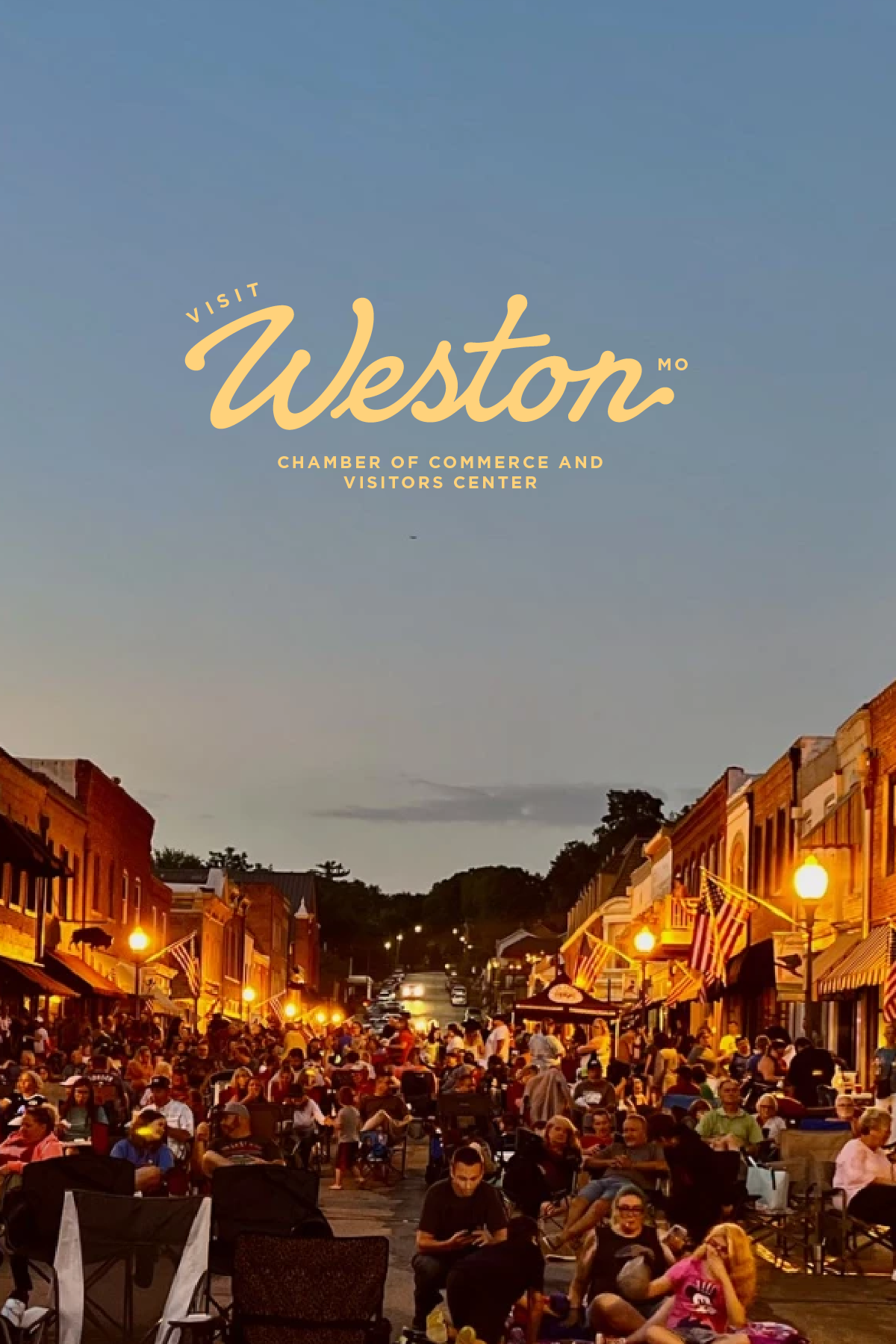
When I developed the brand strategy for the Weston Chamber of Commerce, the goal wasn't simply to redesign a logo. It was to help visitors understand why Weston is worth slowing down for. Every decision—from the logo and typography to the photography, color palette, and content strategy—supported that story. Weston already has something special; the brand was meant to simply give it a cohesive voice that reflected the businesses, history, and nostalgia visitors experience when they arrive.
While this actually turned into a “what could have been” project, it can be used as a great template and resource for other towns and neighborhoods trying to tackle the same scenario.
Step 1. Develop a Cohesive Brand
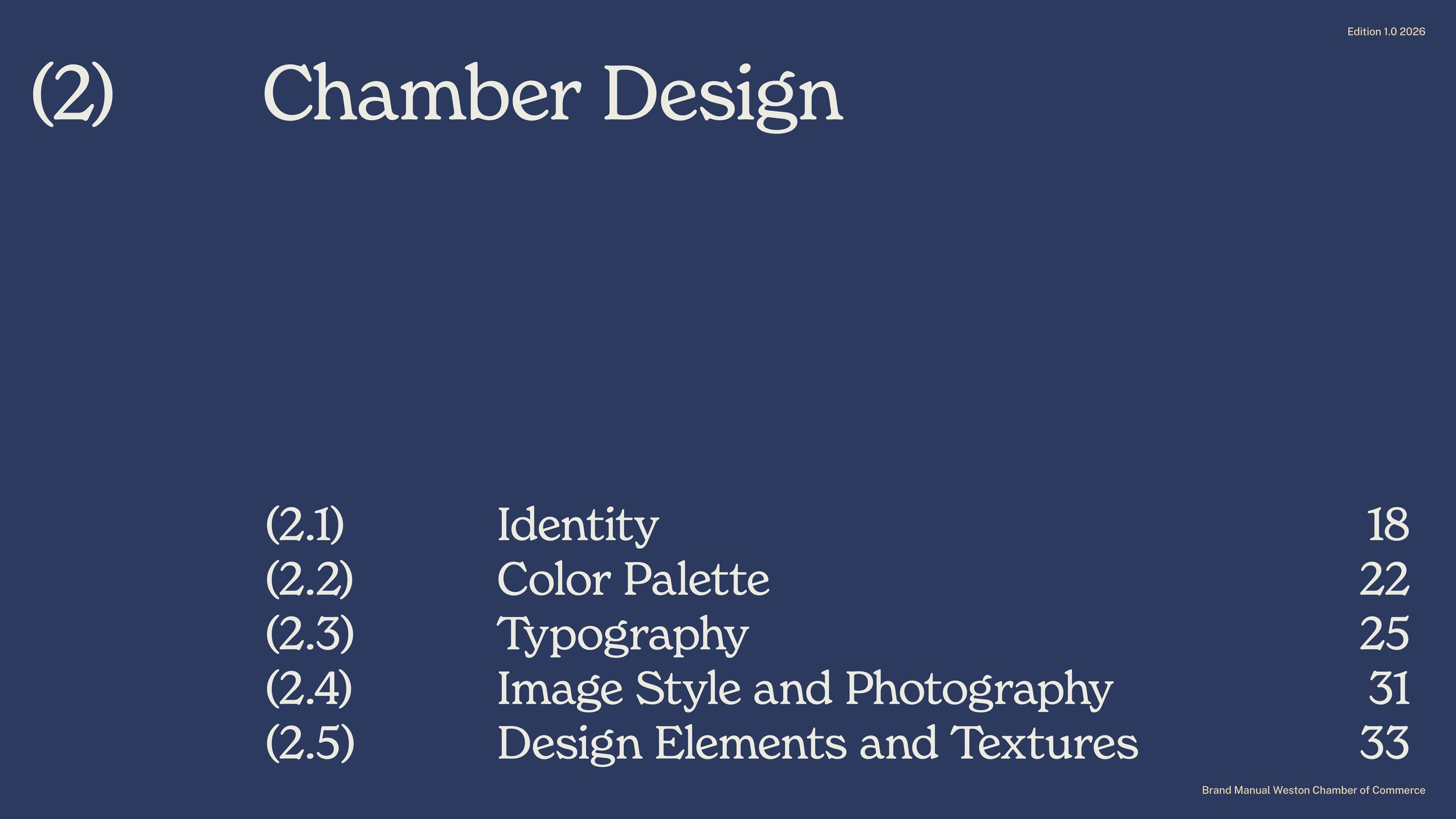
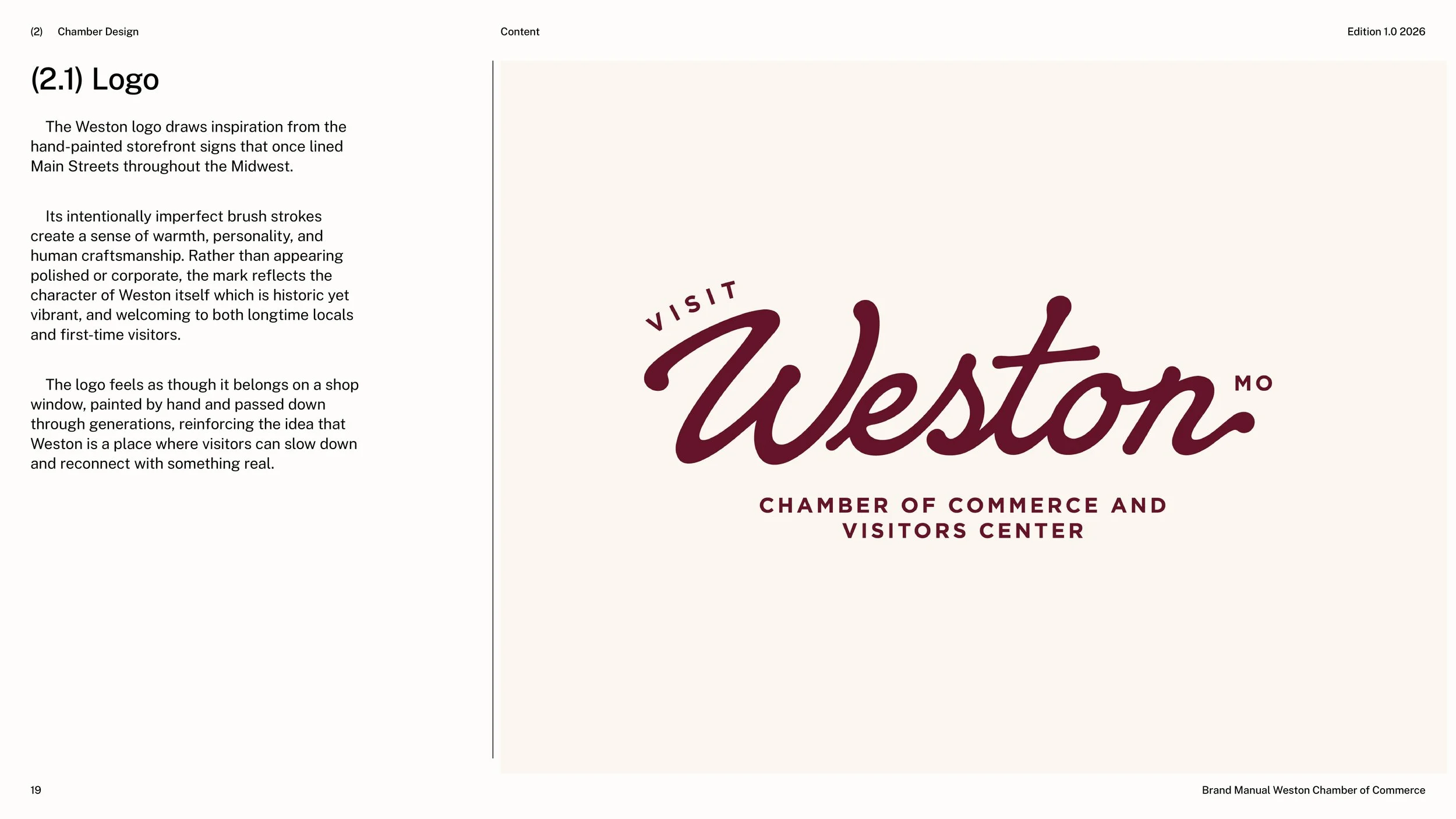
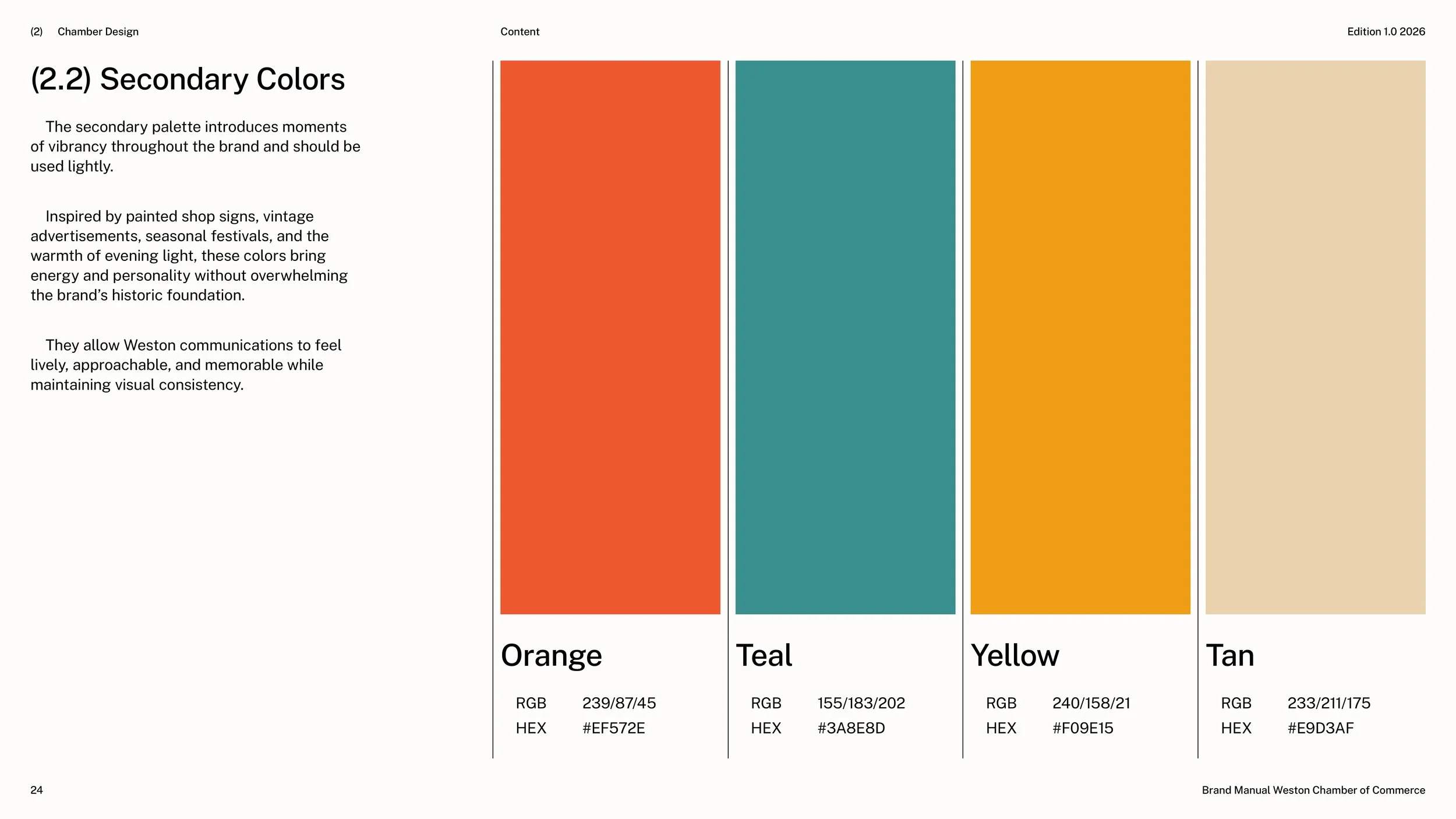
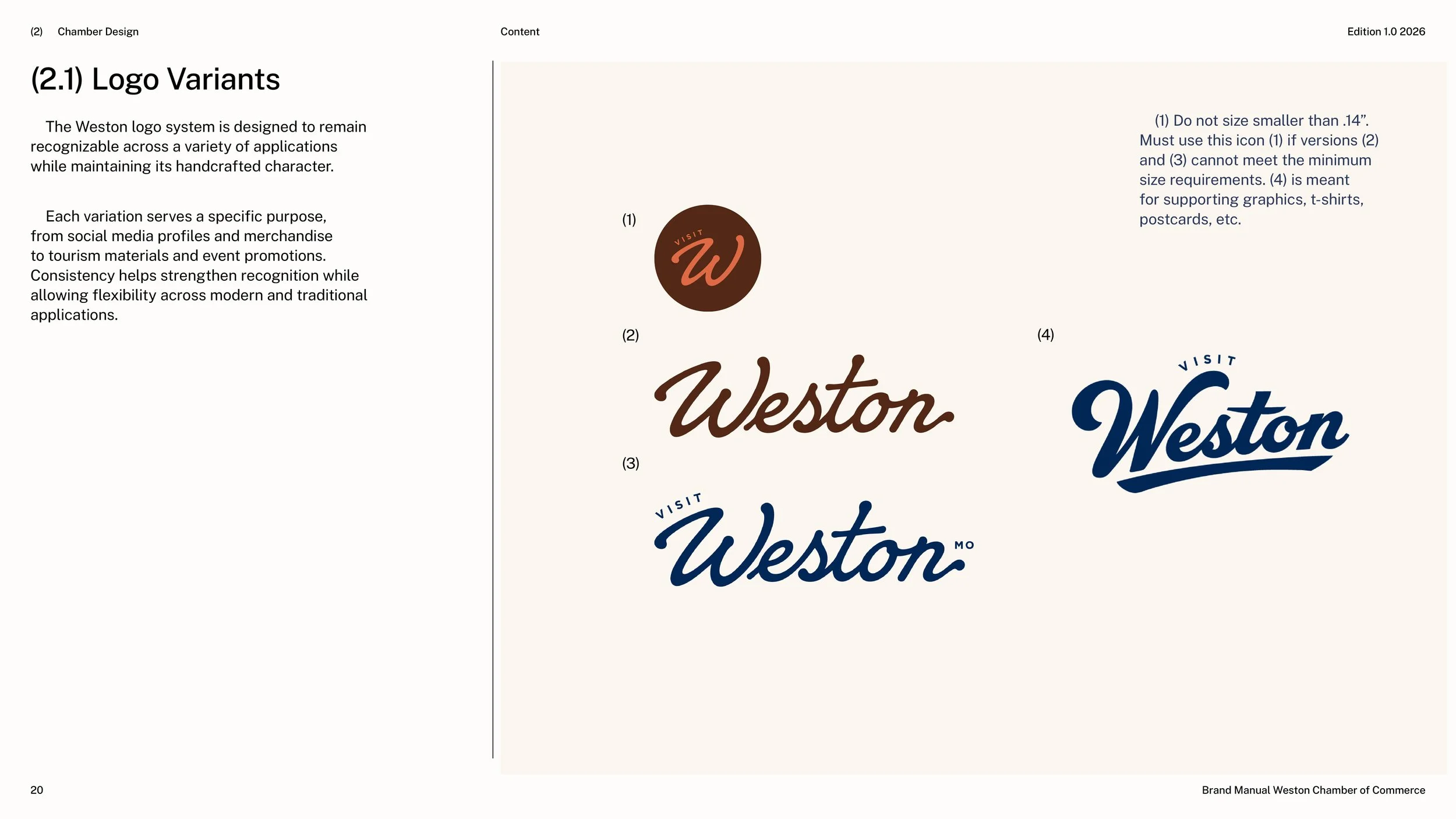
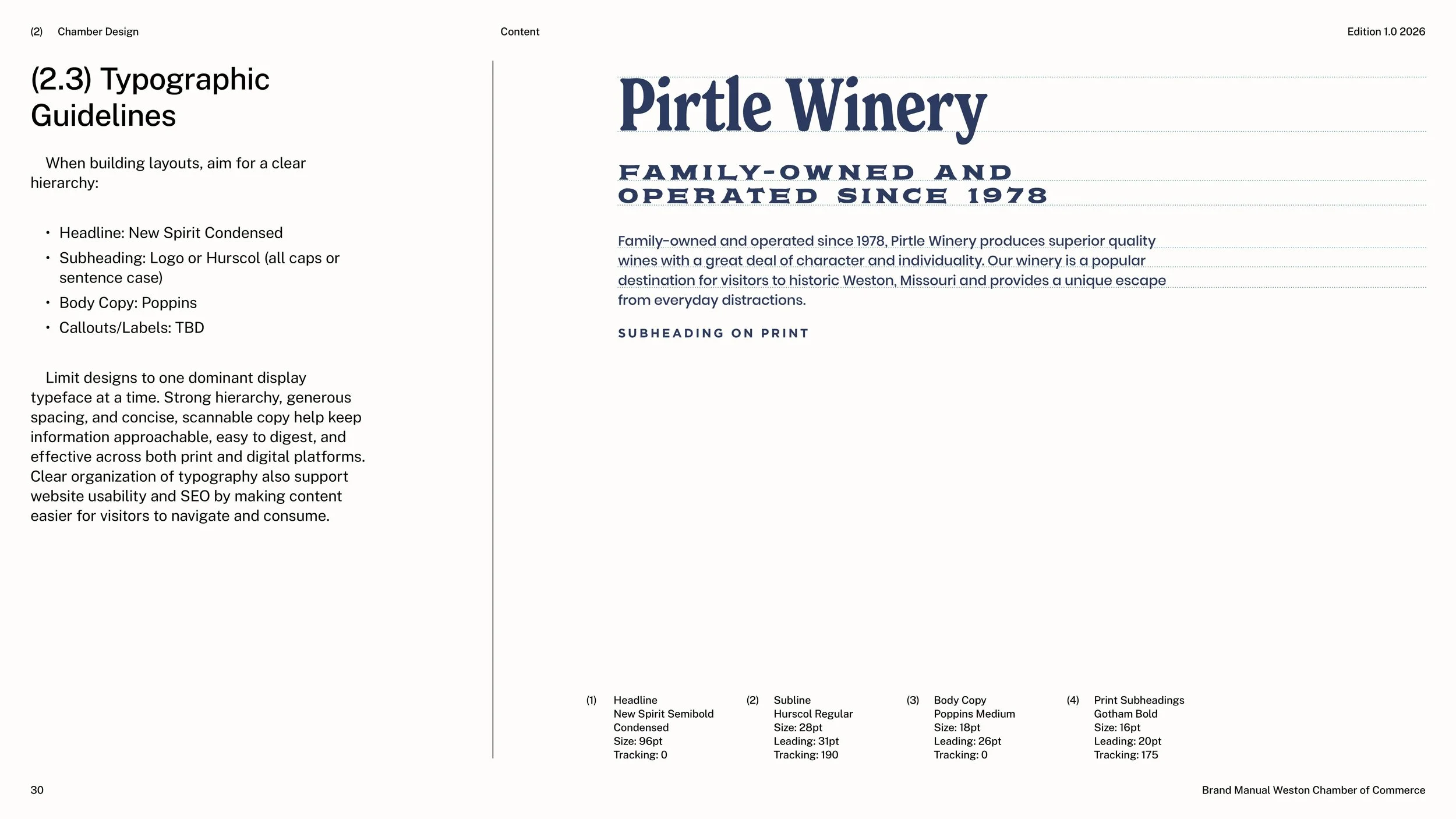
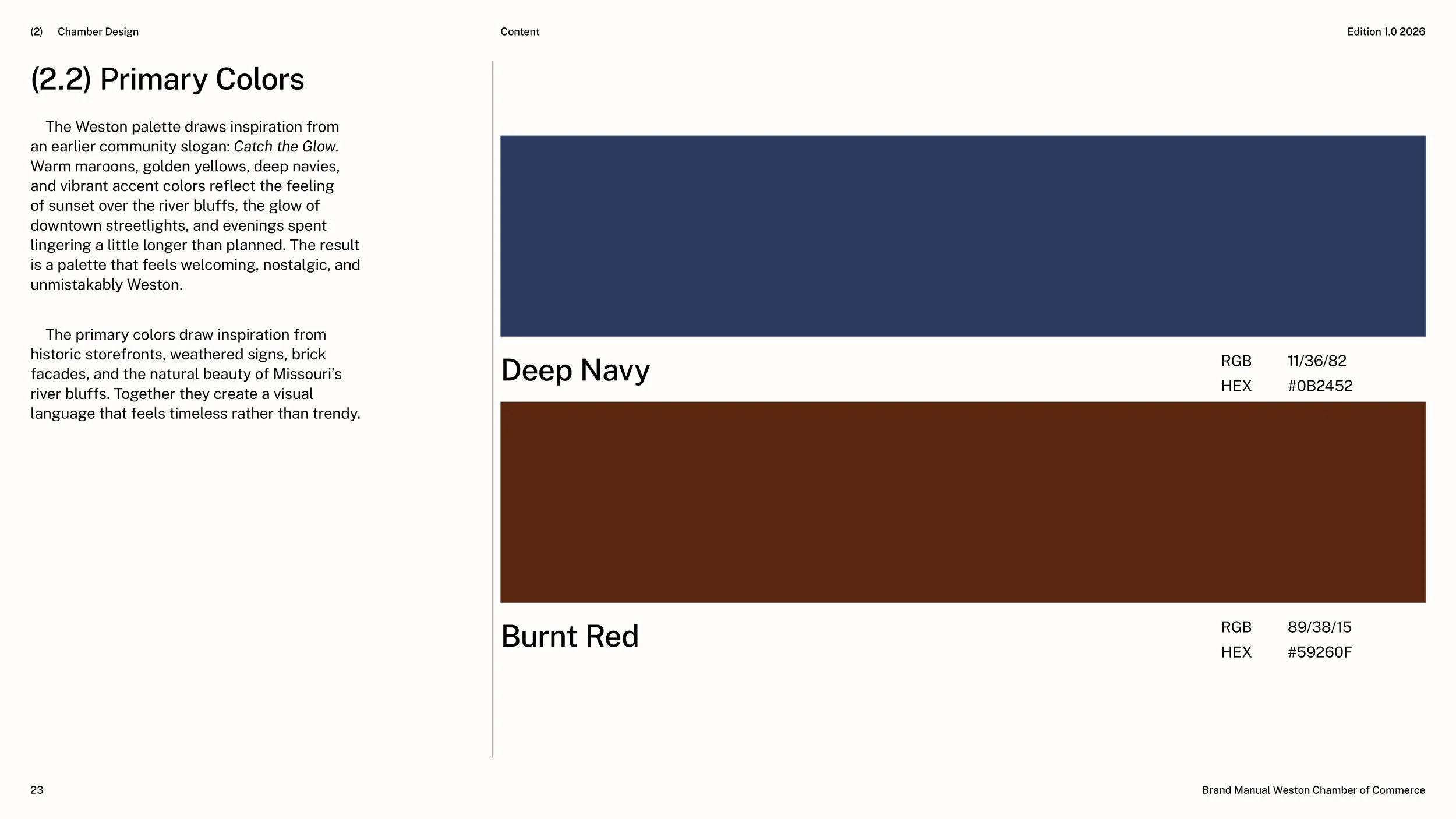
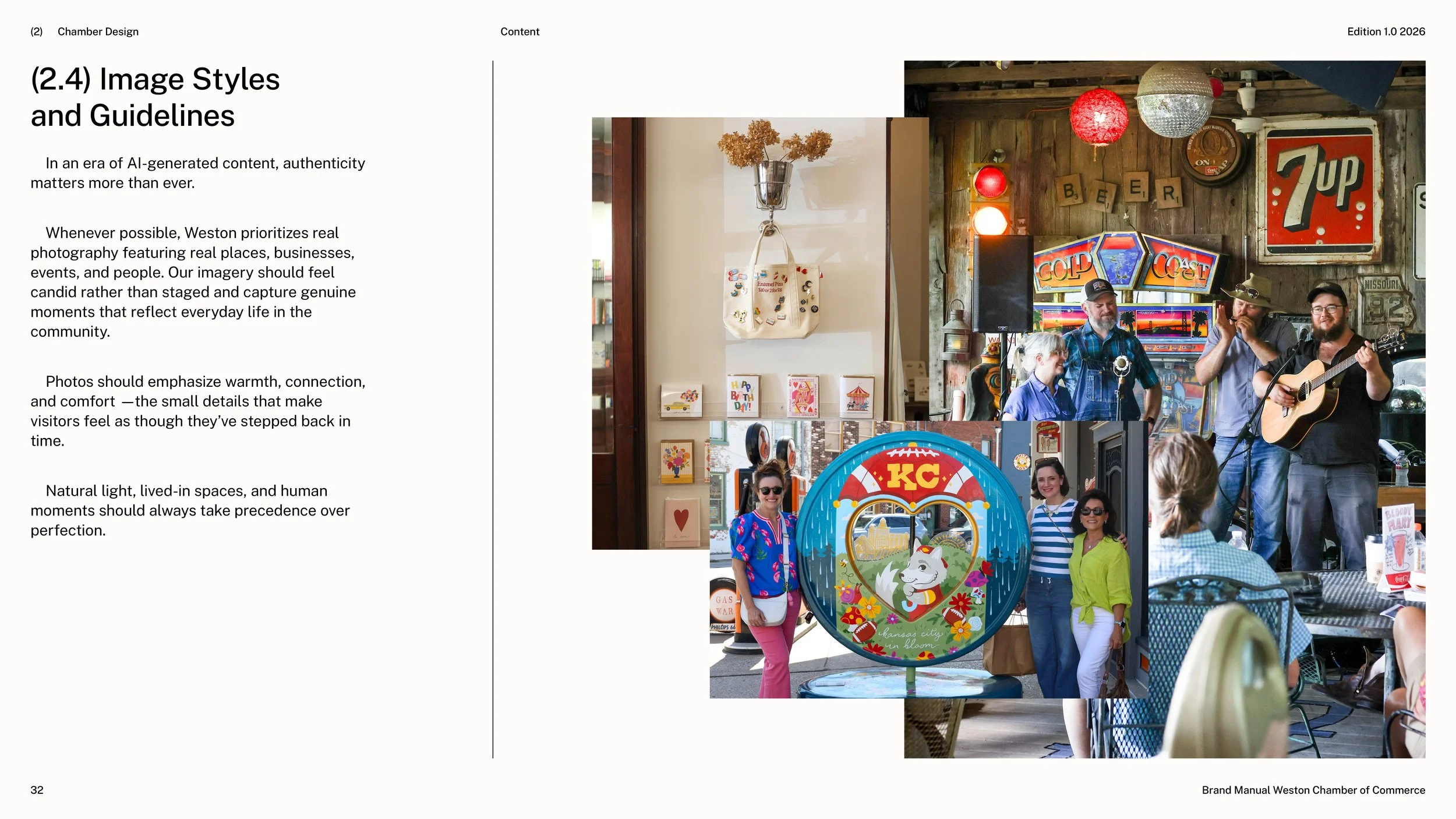
Before diving completely into an advertising plan, establish a brand people can recognize. A cohesive identity includes more than a logo—it should define your color palette, typography, photography style, supporting design elements, and overall voice. When every touchpoint feels connected, visitors begin to recognize and trust your community before they ever arrive.
Speaking of trust, resist the urge to fill your marketing with AI-generated graphics or overly AI-enhanced photography. Visitors are looking for authentic experiences, and your visuals should reflect the real charm of your town, not an idealized version of it.
Step 2. Tell the Town’s Story Through Your Downtown Businesses
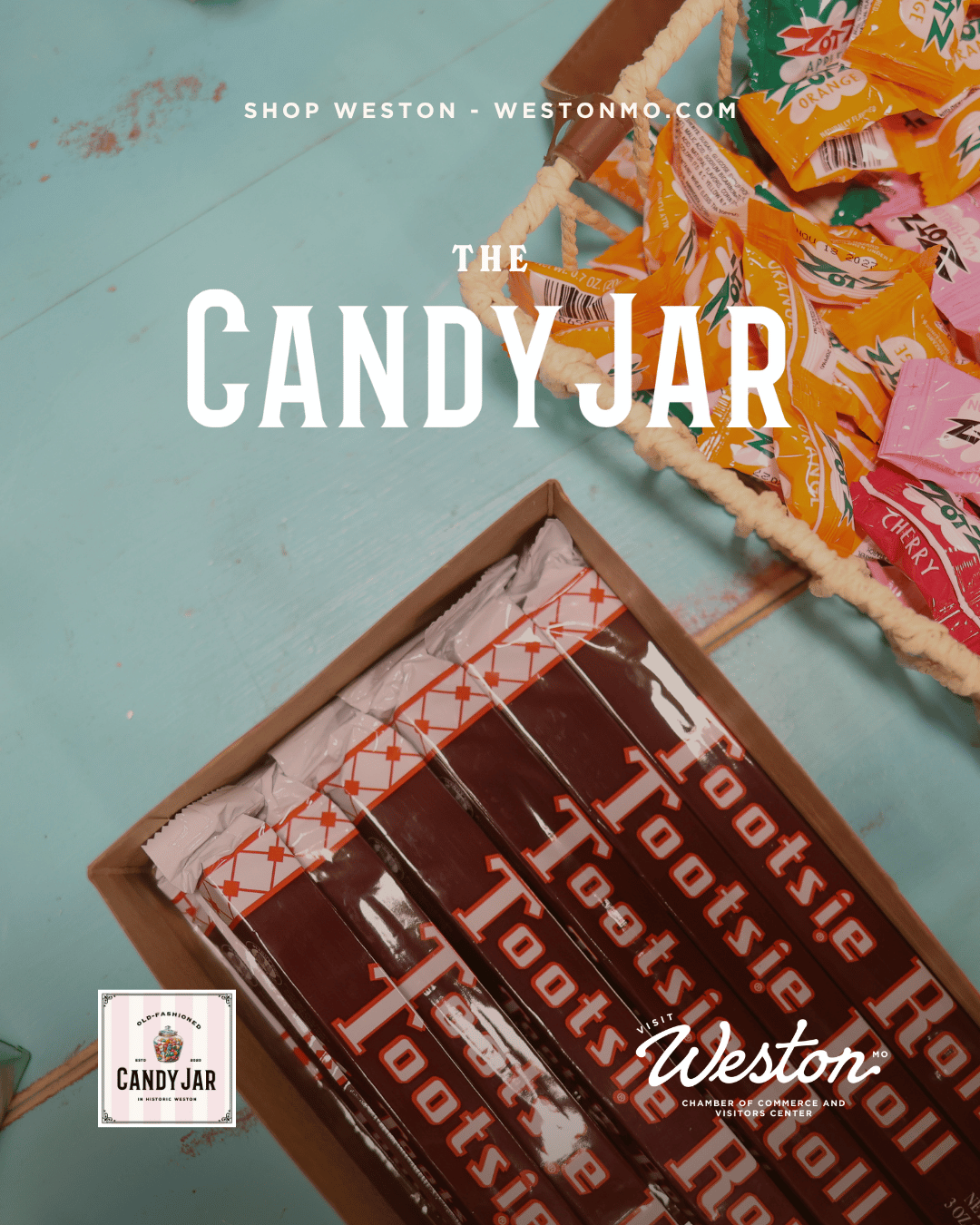
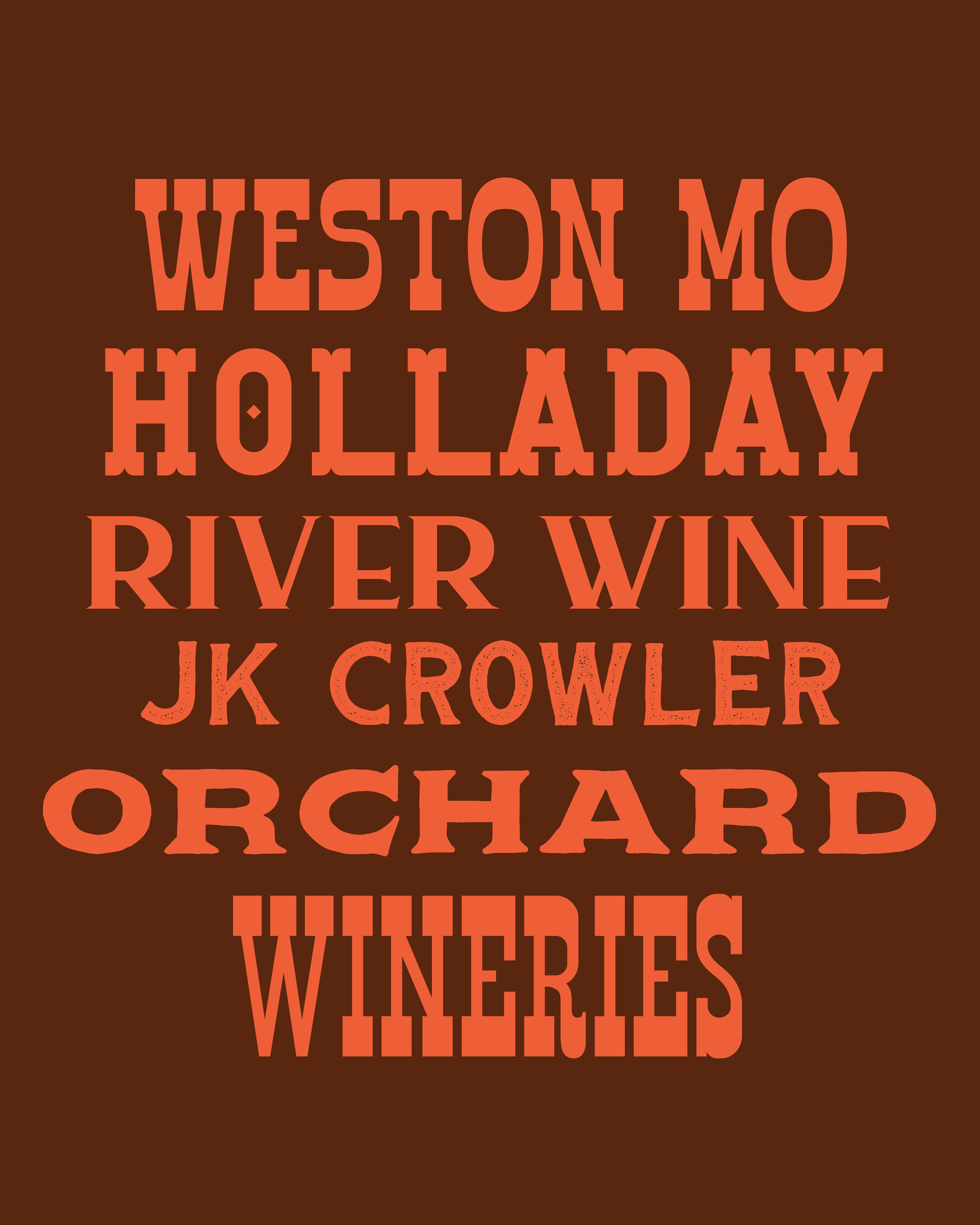
Your downtown is your greatest marketing asset. Every coffee shop, boutique, winery, restaurant, and museum tells part of your town's story. Rather than simply listing businesses, create Reels and Carousel posts that show what it's actually like to visit. If someone decides to stop into one business, there's a good chance they'll explore several more while they're there.
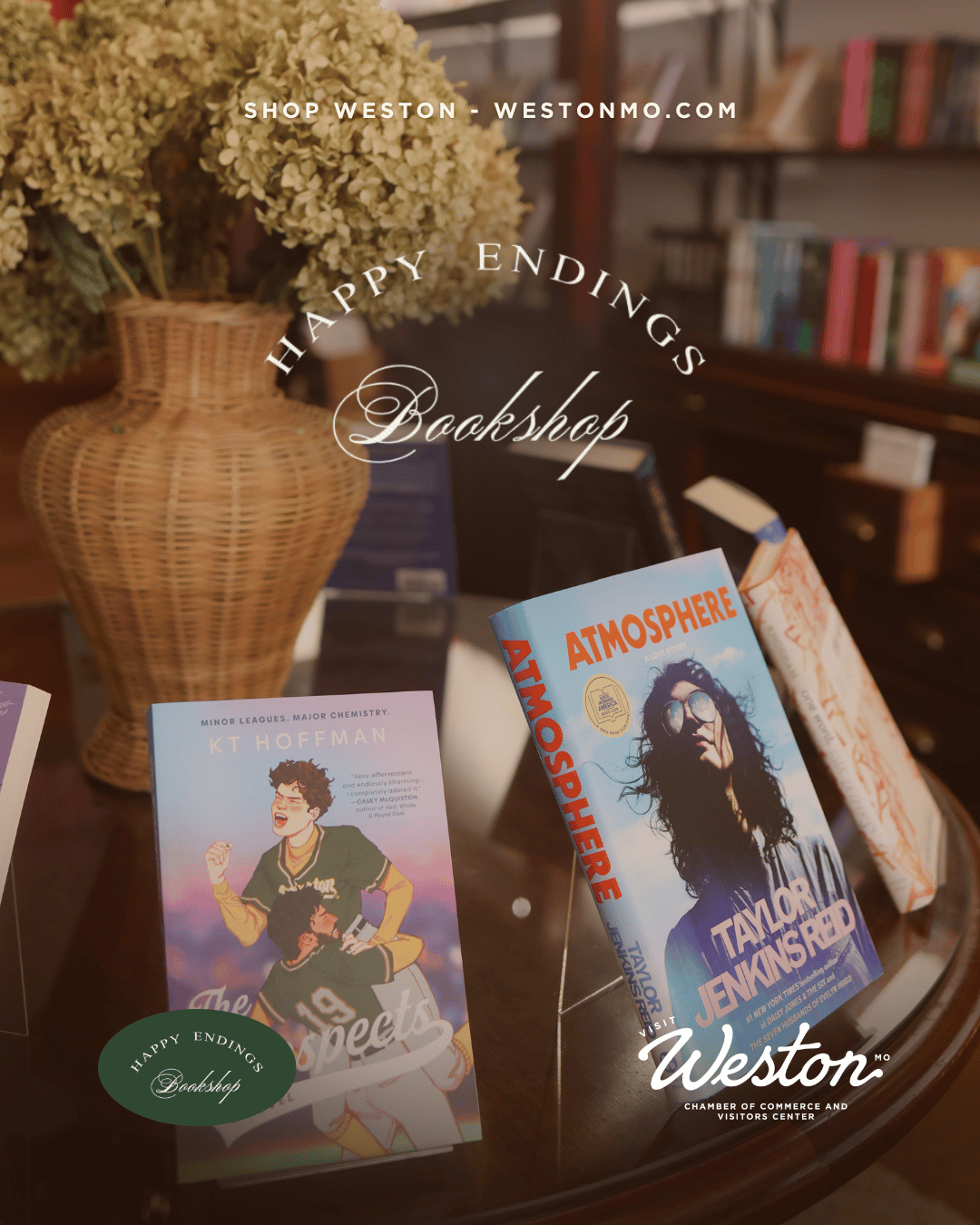
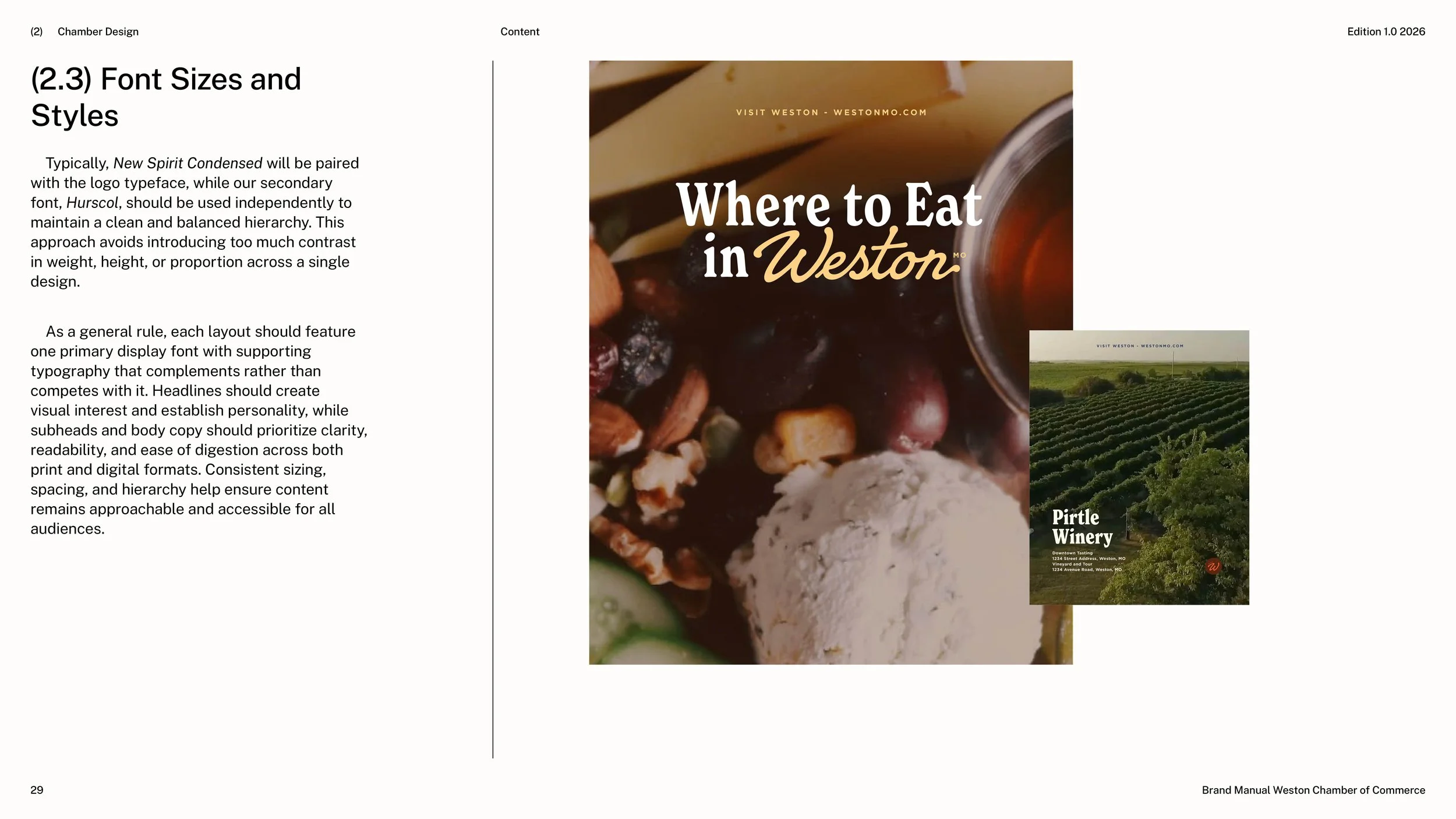
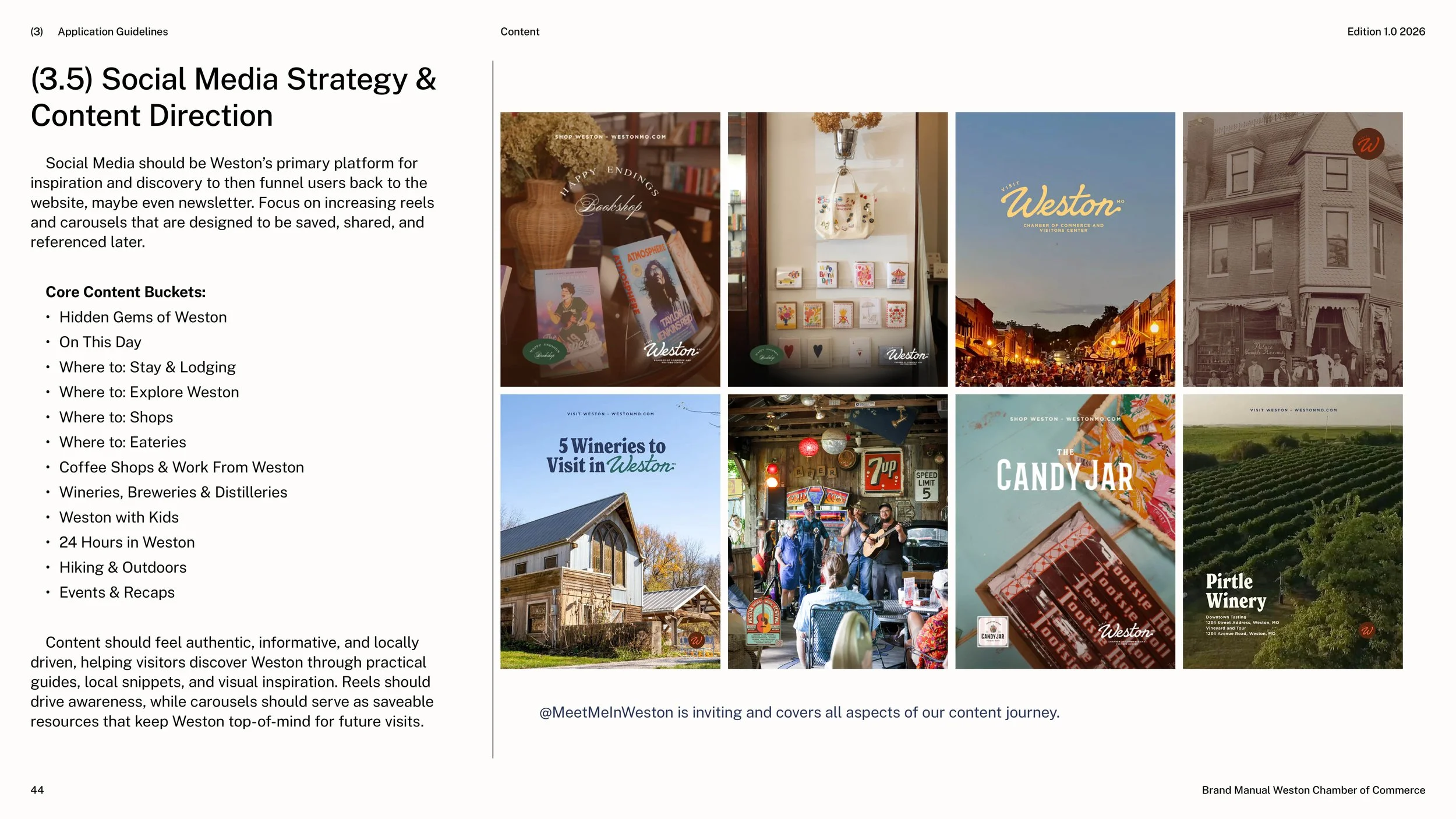
Instead of asking what to post each day, build recurring content that visitors can easily browse and revisit. Content buckets like Favorite Places to Eat, Coffee Shops, Libations, Shopping, Family-Friendly Activities, Walking Tours, Hidden Gems, Where to Stay, Weekend Itineraries, and Seasonal Guides become valuable planning resources that continue working long after they're published.
Your social media should make trip planning easier, not harder. Your ideal post will answer a question or inspire a visit. While a Chamber of Commerce exists to support its local businesses, the content should always be created with the visitor in mind. The more useful your content is to potential travelers, the more valuable it ultimately becomes for the businesses you're promoting.
Step 3. Create Content Buckets People Will Save
Step 4. Promote Events Beyond the Flyer
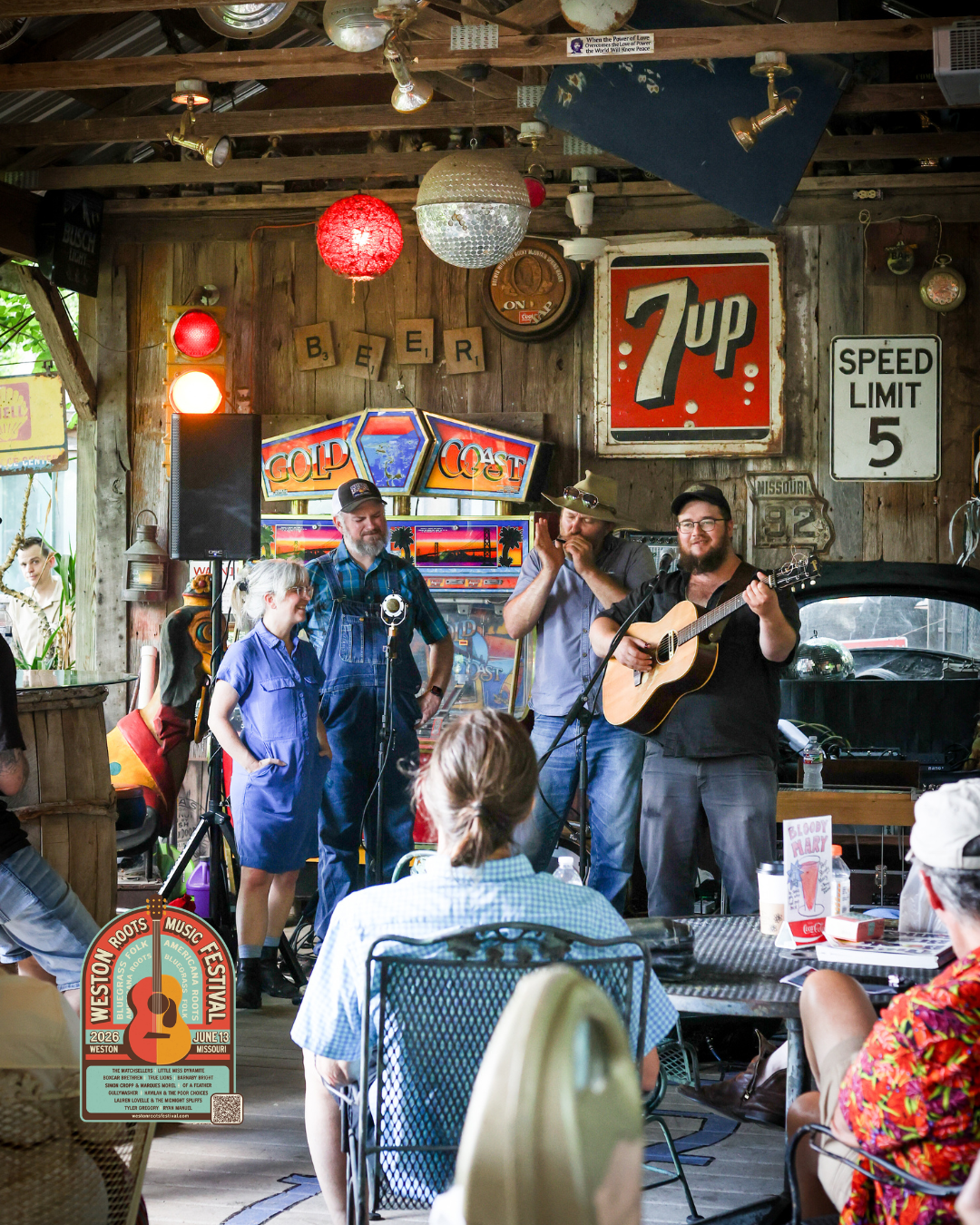
Some of the best tourism marketing happens before and after an event, not just during it. The event flyer will only get you so far. Share highlights from previous years, showcase vendors, tell stories, and create content that builds anticipation. Even if your organization isn't directly promoting the event, every successful festival strengthens your community's identity. Nothing inspires future visitors quite like seeing what they missed and bookmarking it for the next year.
Your calls to action shouldn't stop at an event calendar with a two-sentence description. Instead, guide visitors to a dedicated landing page where they can experience the event before they even arrive. Include beautiful photography, a full schedule, maps, FAQs, ticketing or RSVP information, parking details, nearby restaurants, and lodging recommendations. The easier you make it for someone to picture their day—and plan it—the more likely they are to show up.
Because a full website strategy was beyond the scope of this guide, here's an example of an event landing page we created for MoCo Mom to demonstrate how detailed, visitor-focused pages can improve the planning experience.
Step 5. Build for Search, Not Just Social
Instagram introduces people to your town, but your website helps them plan the trip. Create articles that answer the questions visitors are already searching for, then use social media to drive traffic back to those resources. Every guide, itinerary, and local recommendation becomes another opportunity to appear in Google while providing genuine value to future visitors.
Again, many of these recommendations have been tested and refined through one of my passion projects, MoCo Mom. Visit MoCoMom.com to see how thoughtful branding, SEO, content strategy, and user experience work together to guide visitors from discovery to subscription.
A travel destination that does this especially well is Travel South Dakota. When building your website, avoid the temptation to rely on third-party, jQuery-driven tools like Elfsight that promise SEO benefits but often fail to deliver meaningful search visibility for directories, event calendars, and other dynamic content. Instead, build these features natively within platforms like Squarespace or WordPress whenever possible so search engines can properly crawl and index your content. Finally, connect your site to Google Search Console, submit and monitor your XML sitemap, and keep it updated as new pages and events are added to follow SEO best practices.
Step 6. Segment Your Audience
Tourism marketing shouldn't end when someone follows your Instagram account. Think about how each platform works together. Social media sparks curiosity, your website helps visitors plan, your newsletter keeps them engaged, and a well-organized directory encourages them to explore even more businesses once they're in town. The easier you make it for visitors to discover, plan, and explore, the more value you create for both travelers and the chamber members who rely on tourism to grow their businesses and advertise more efficiently.
Remember, not everyone wants the same information. Locals, weekend travelers, families, history buffs, and chamber members all have different interests. Better email segmentation allows you to communicate more effectively, provide greater value to your members, and avoid overwhelming subscribers with content that isn't relevant to them.
Step 7. Think Beyond the Website
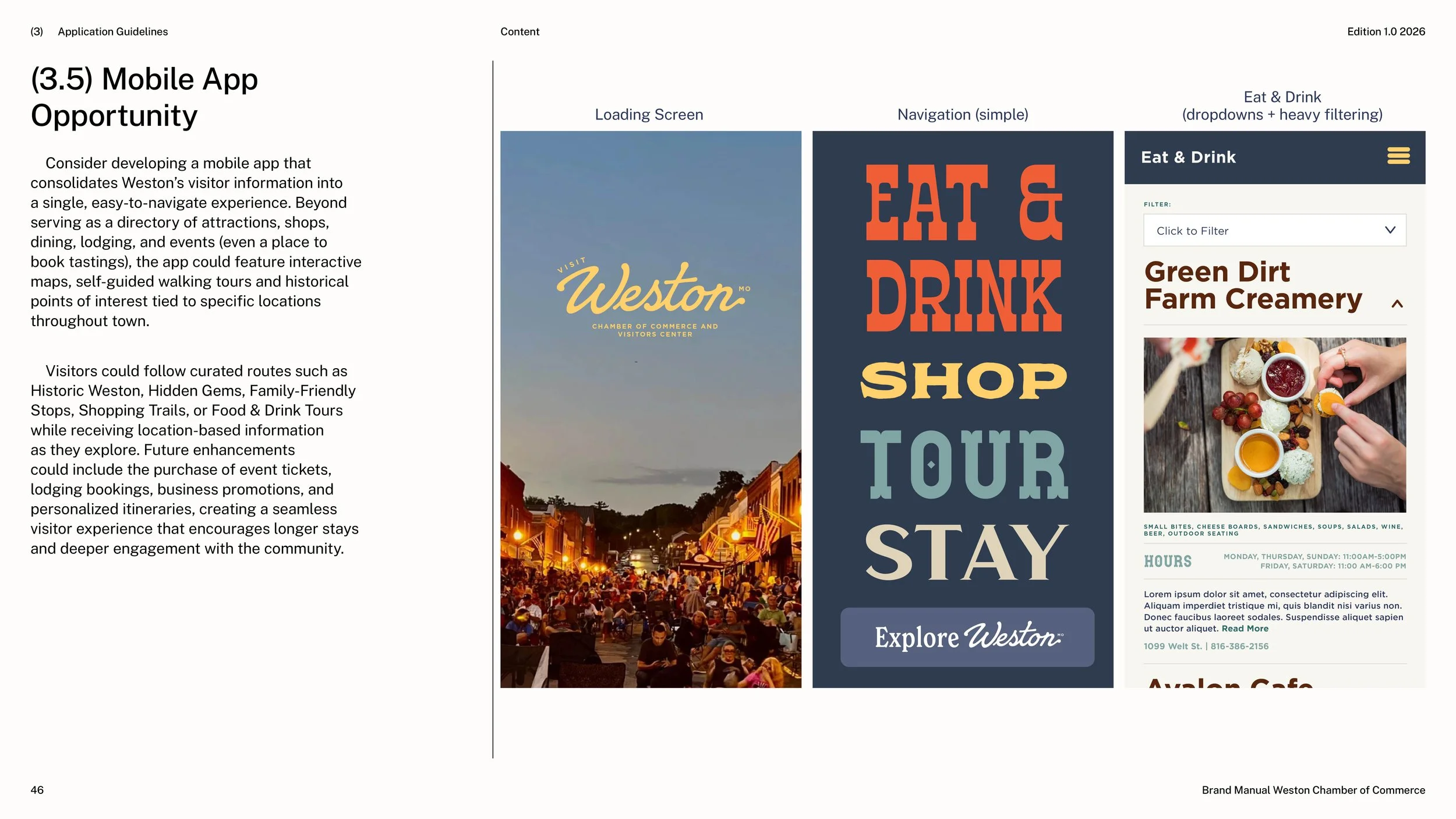
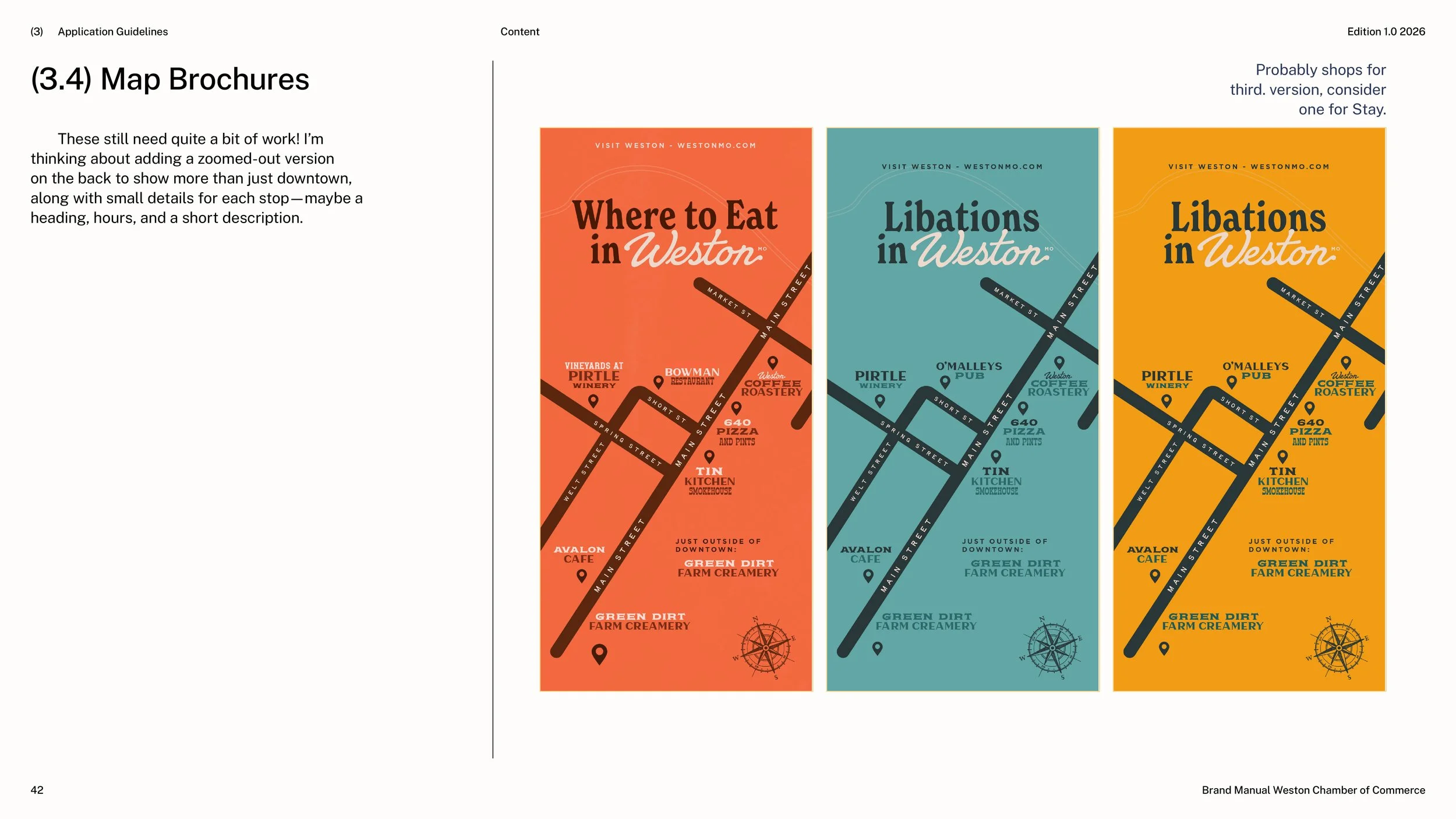
Today's visitors expect information wherever they are. A mobile app can combine business directories, interactive walking tours, maps, event calendars, and suggested itineraries into one place. The same resources can also be offered in print, making them accessible for visitors of every age.
With the rise of AI, it's tempting to choose a platform that promises a fully functioning app in just a few days. While those tools can certainly speed up development, they don't replace thoughtful user experience. If visitors can't quickly find what they're looking for, become frustrated by confusing navigation, or abandon the app after one use, it hasn't done its job. Whether you're investing in a custom-built application or using an AI-powered platform, take the time to map the visitor journey or hire someone who understands user experience to help. A great app doesn't just look good; it makes exploring your community effortless.
Growth Happens Through Consistency
Successful tourism brands aren't built through one viral reel or one great event. They're built through consistent storytelling that makes visitors want to save your content, remember your town, and eventually experience it for themselves. When your brand, businesses, events, and marketing all tell the same story, you're no longer promoting individual attractions, you're creating a destination people can't wait to visit.
While this guide won't be coming to life in Weston, I hope it gives other small towns a practical starting point for building a tourism brand that actually inspires people to visit. And if you need help getting started or have questions regarding best platforms to use, just contact me at hello@kileyloesch.com.