
MoCo Mom: A Case Study for Support in Motherhood
Designing the Missing Infrastructure
A three-year case study in information accessibility, community infrastructure, and the business of making motherhood easier to navigate.
The Opportunity: Making Motherhood a Little Easier
The Approach: Design for Utility, Not Attention
The Solution: Less Searching. More Living.
The Resource Library: A Directory Is Only as Good as Its Information
The Strategy: Give Them What They Need. Keep Them Coming Back.
The Community: You Can't Build a Village Behind a Screen
The Business Model: Mothers as Members, Not the Product
The Results: The Numbers—and What They Proved
What's Next: An Unfinished Idea
01. The Starting Point: It Takes a Village. But First, You Have to Find It.
Finding a pediatrician shouldn't require a Facebook recommendation. Finding childcare without a waitlist shouldn't feel like winning the lottery. And figuring out what to do with a two-year-old on a Tuesday morning shouldn't require scrolling through six different Instagram accounts.
Yet this is how mothers navigate some of their everyday life.
We have government resources, childcare directories, community organizations, and endless parenting content. What we don't have is a reliable way to connect it all. Essential information is often organized around individual agencies or services rather than the families trying to navigate them.
And for military families, every PCS means starting the entire process over again with every single move. The problem for Moore County (MoCo) was never a lack of resources. It was the amount of work required to find them.
02. The Approach: Design for Utility, Not Attention
The internet has no shortage of parenting advice. What mothers need is somewhere they can find an answer without falling into another 20-minute scroll.
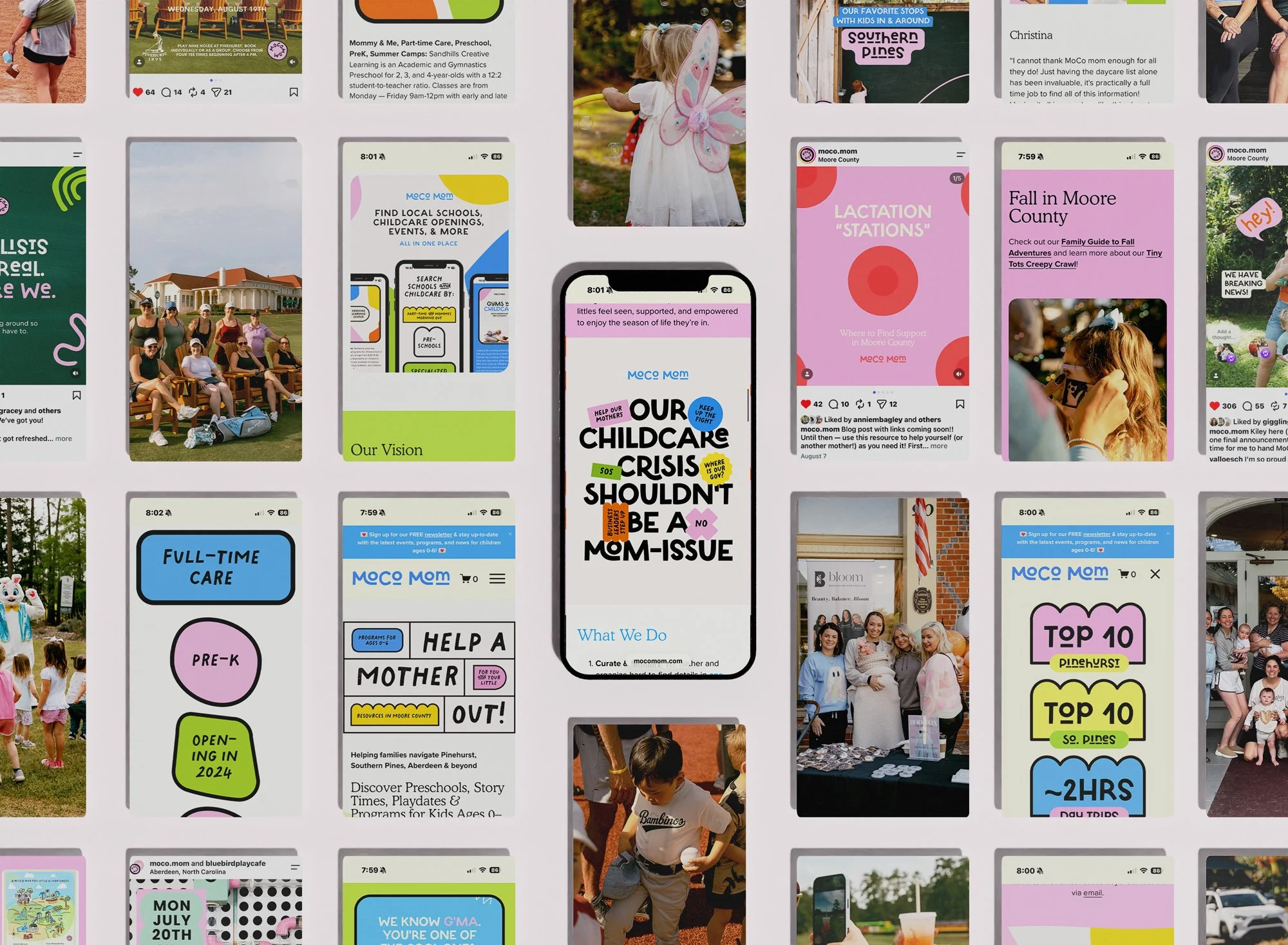
I approached MoCo Mom as a design problem rather than a content opportunity. Every decision—from the visual identity and navigation to the way resources were categorized—was intended to make information easier to access.
The brand needed to feel warm, familiar, and distinctly maternal without compromising functionality. Beautiful, yes. But more importantly, useful.
Good design wasn't simply an aesthetic differentiator. It was part of how the platform gave mothers their time back.
03. The Solution: Less Searching. More Living.
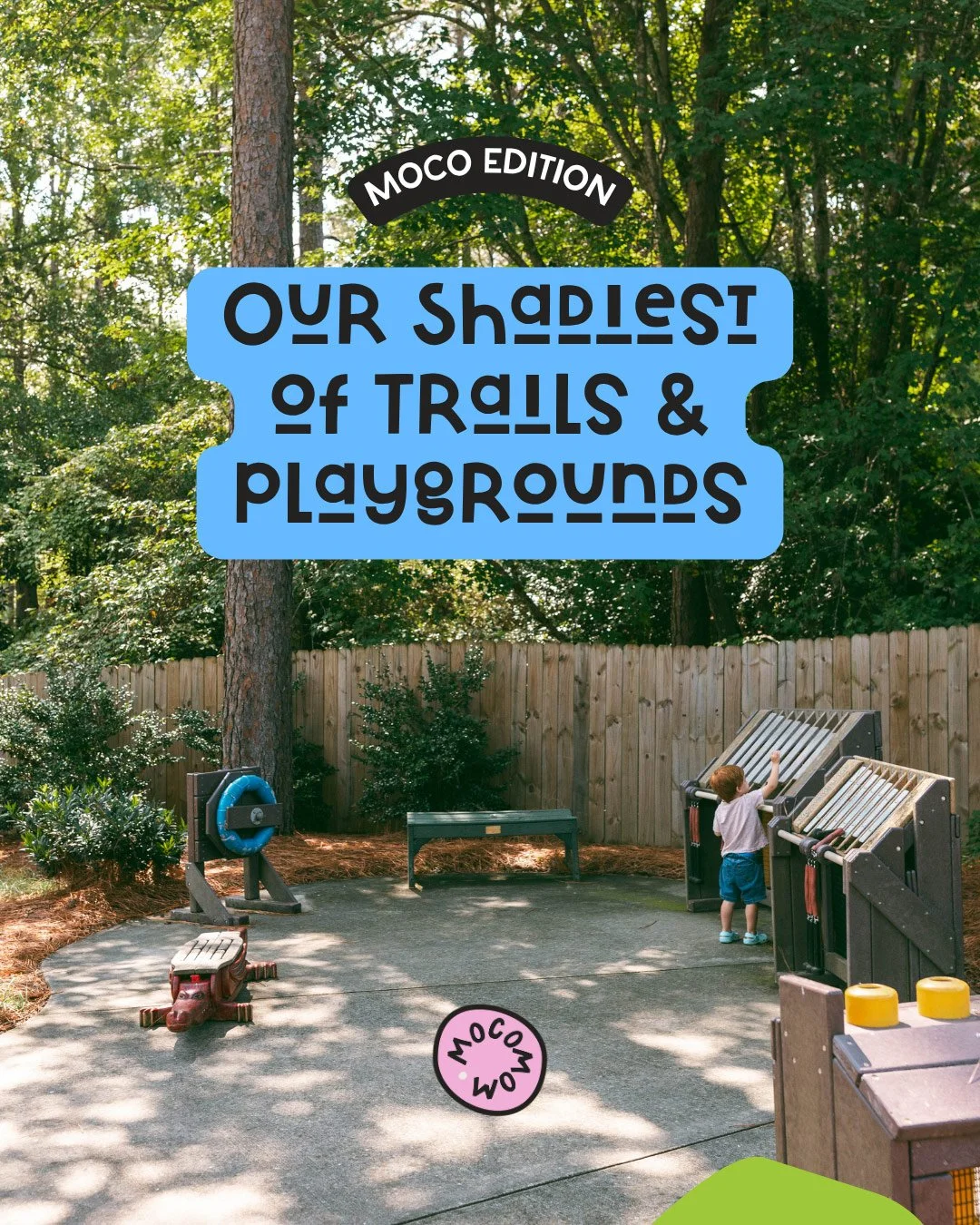
What if one website could tell you which preschools had openings, where to find a shady playground in the heat of summer, what was happening this weekend, and where to meet other mothers?
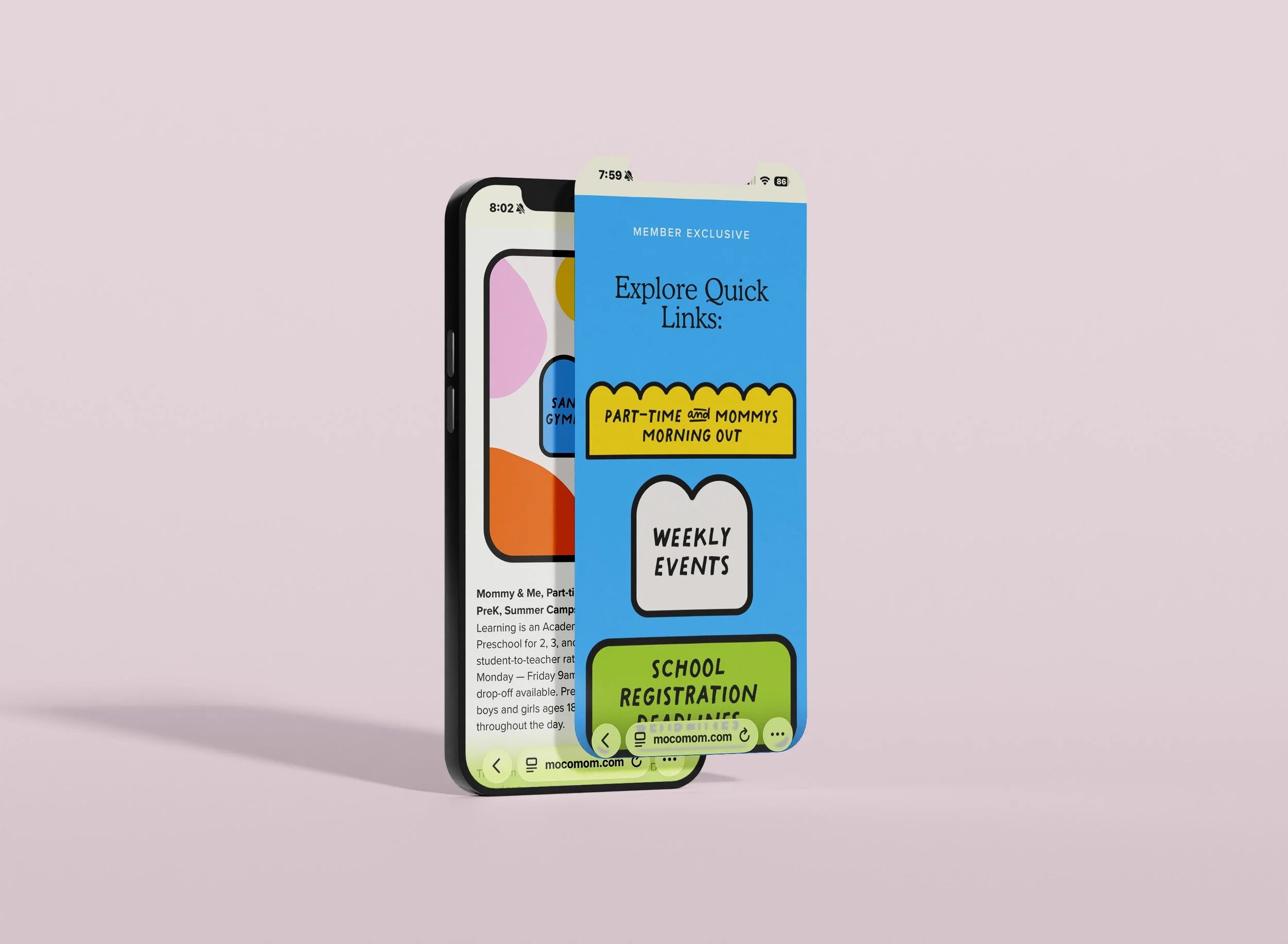
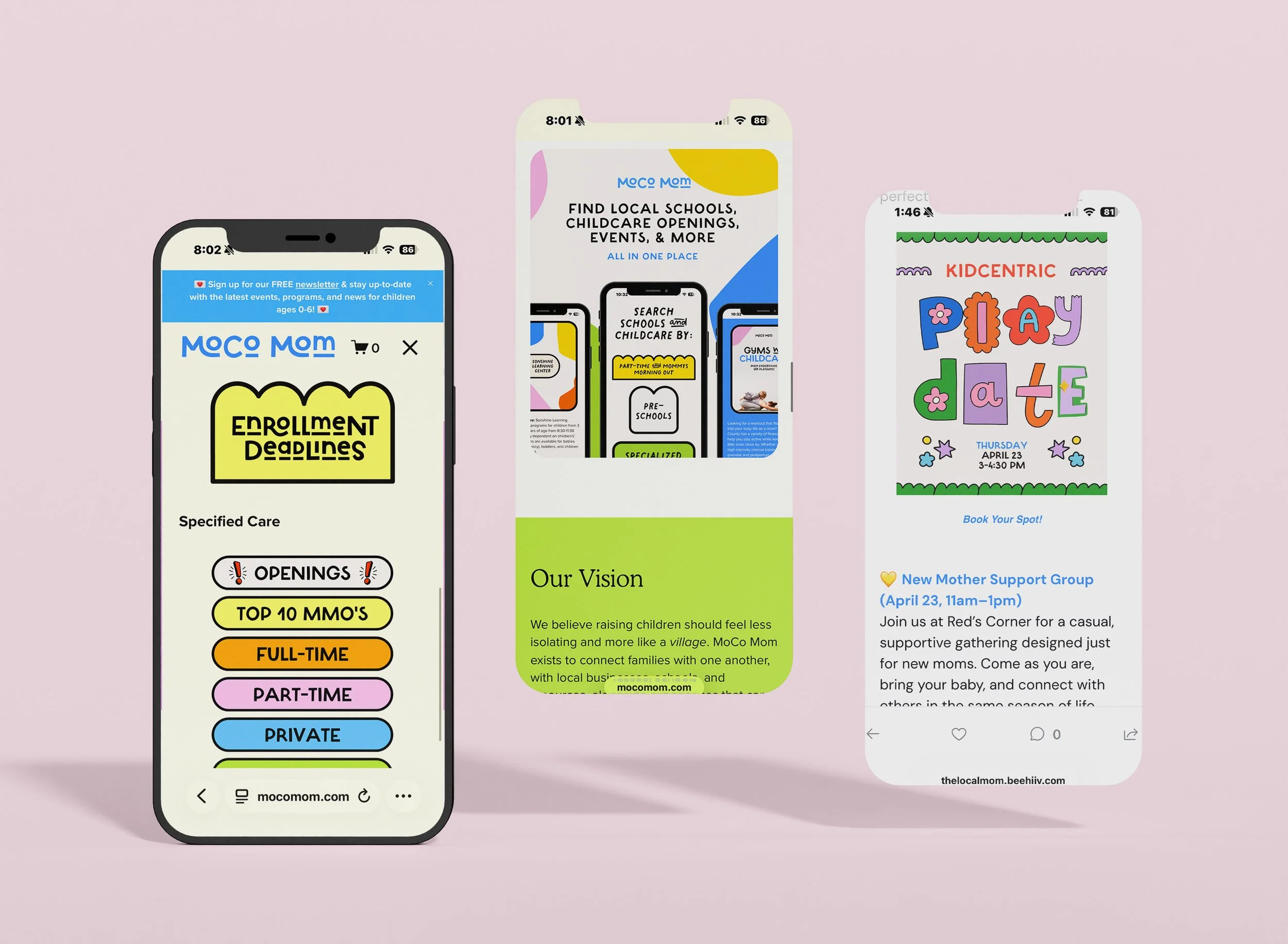
Through MoCo Mom, I developed a centralized resource library, local events calendar, weekly newsletter, and membership platform built specifically around families with children ages 0–6. Instead of producing endless articles for mothers to consume, I vetted and organized the information they were already searching for.
The objective was simple: fewer tabs open, fewer questions unanswered, and more opportunities to actually participate in the community. I was never trying to tell a mother how to do something or what to do, I was simply trying to show them that they could depend on us to find what they genuinely needed (which often times isn’t a new recipe...).
04. The Resource Library: A Directory Is Only as Good as Its Information
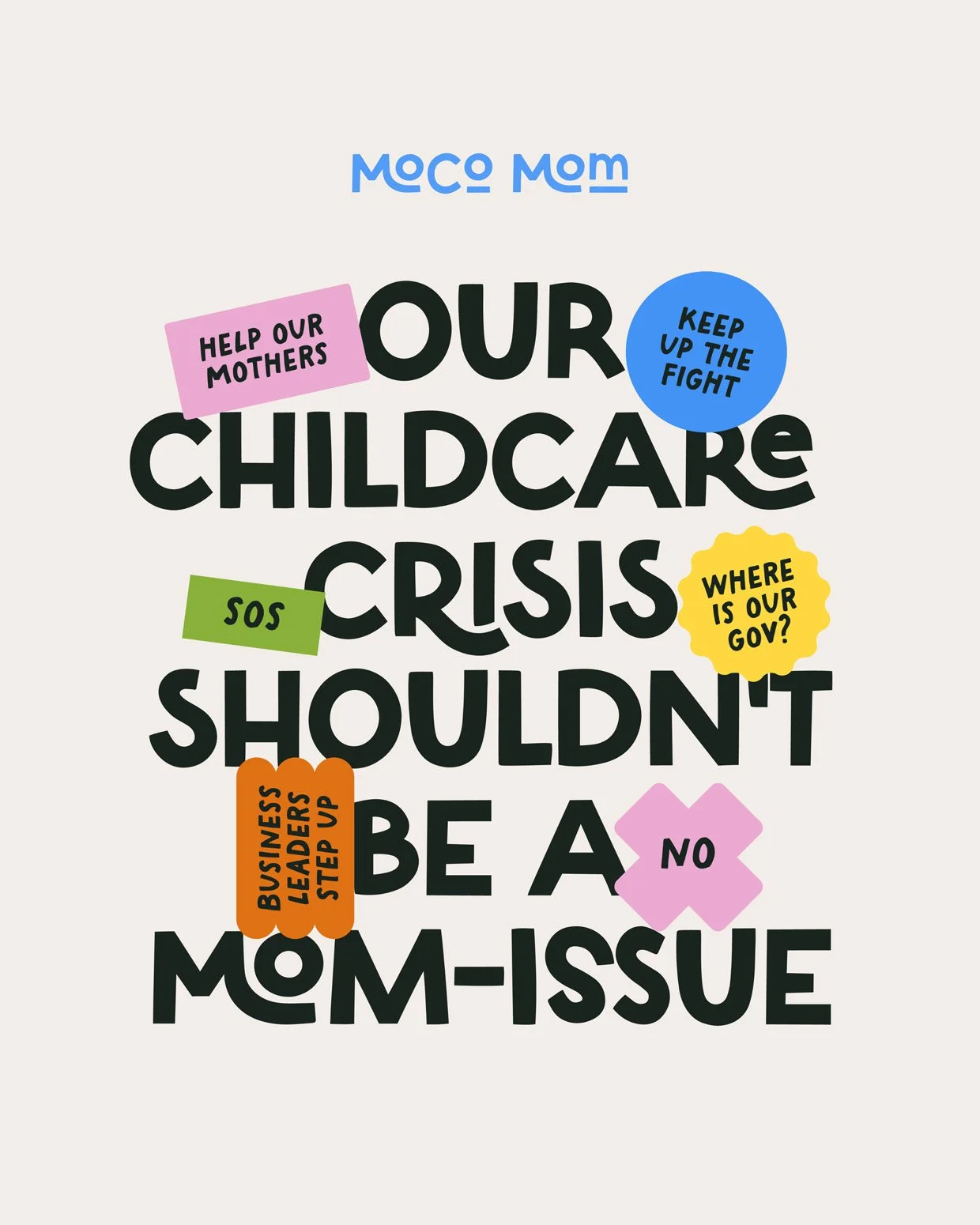
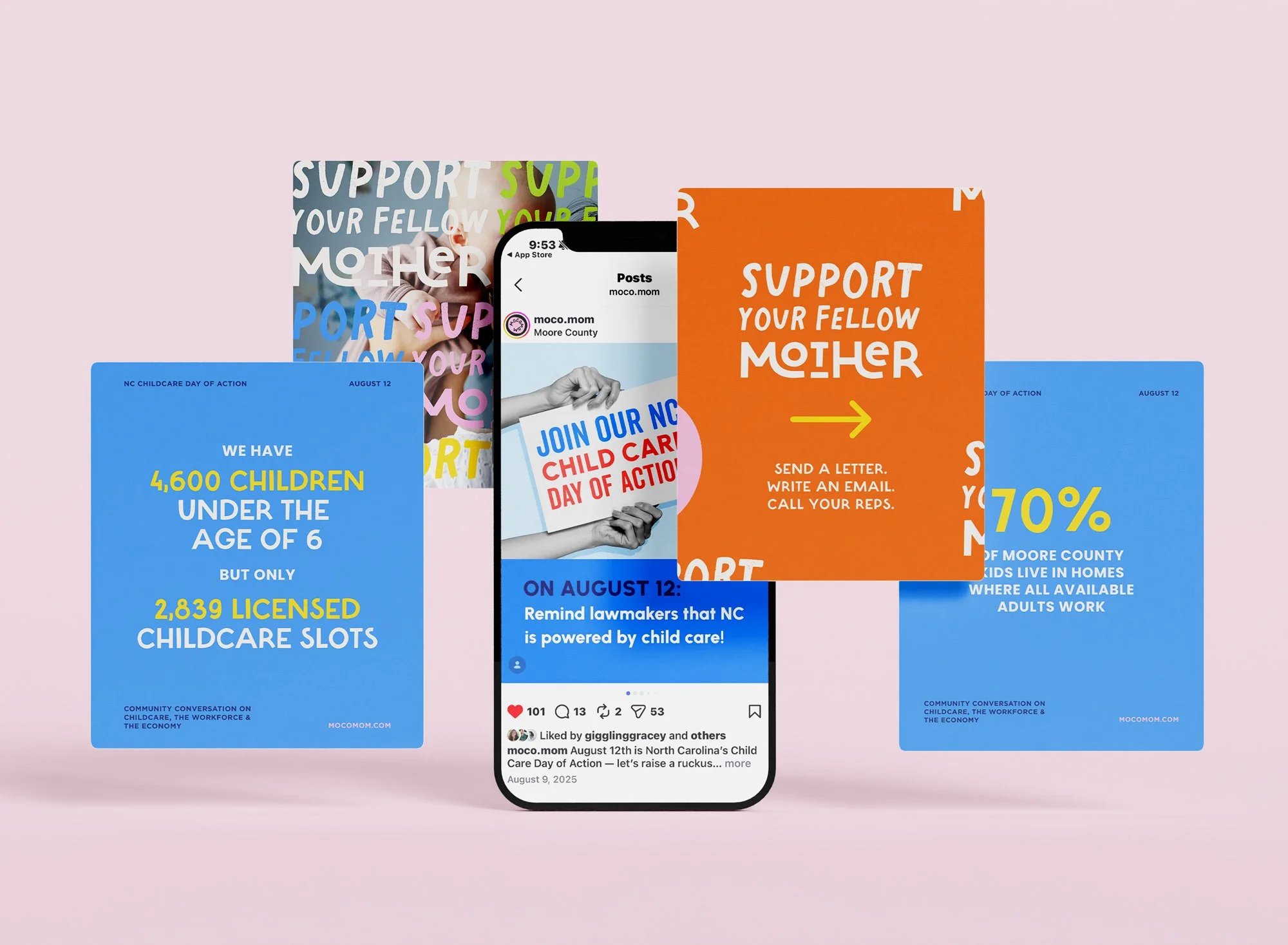
The data is scary. Moore County had approximately 4,600 children under six and just 2,839 licensed childcare slots. Some providers reported waitlists extending up to three years. For military families arriving on PCS orders (and over 50% reporting difficulty securing care), finding care could take longer than their entire assignment and completely eliminate the opportunity for a spouse’s potential career.
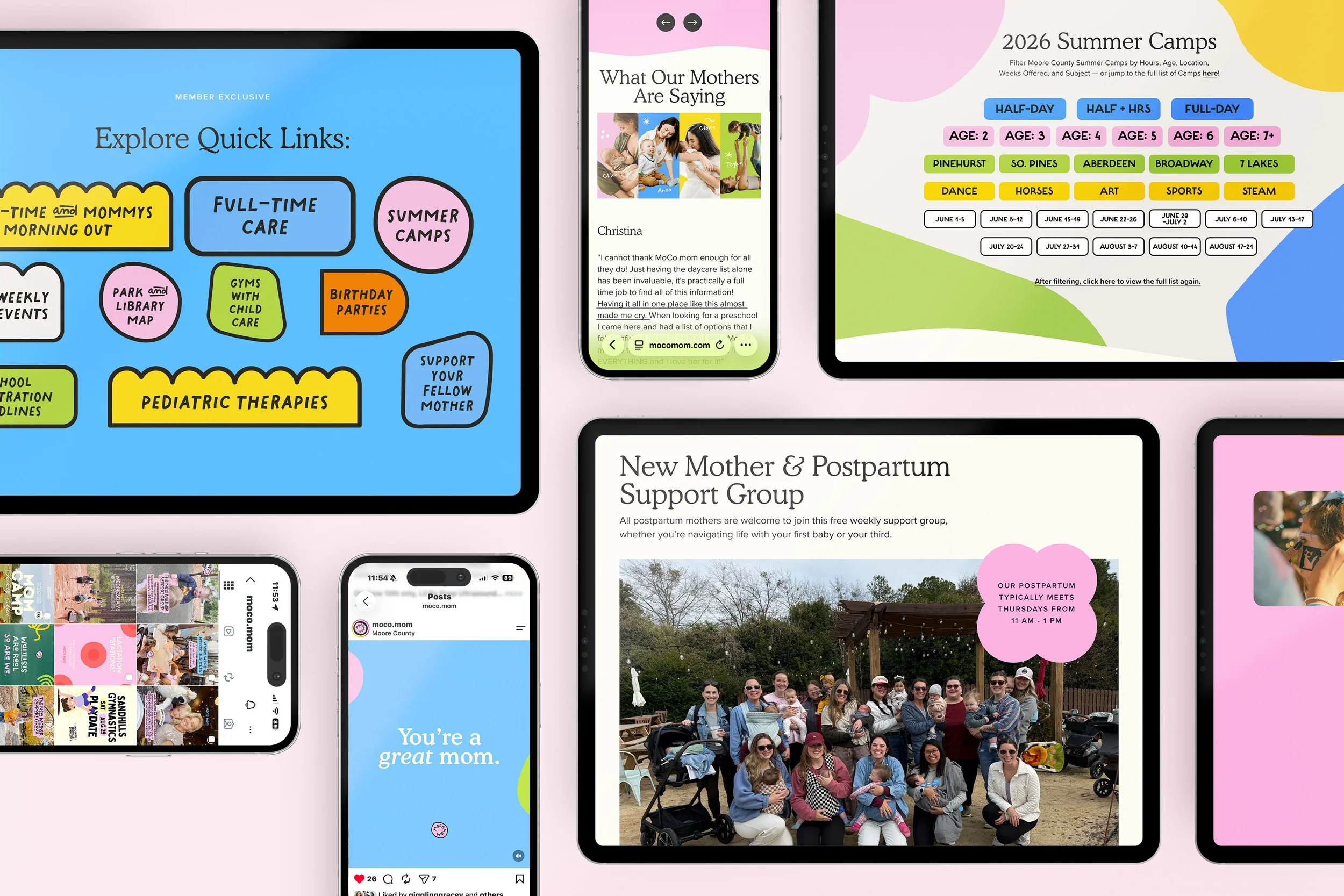
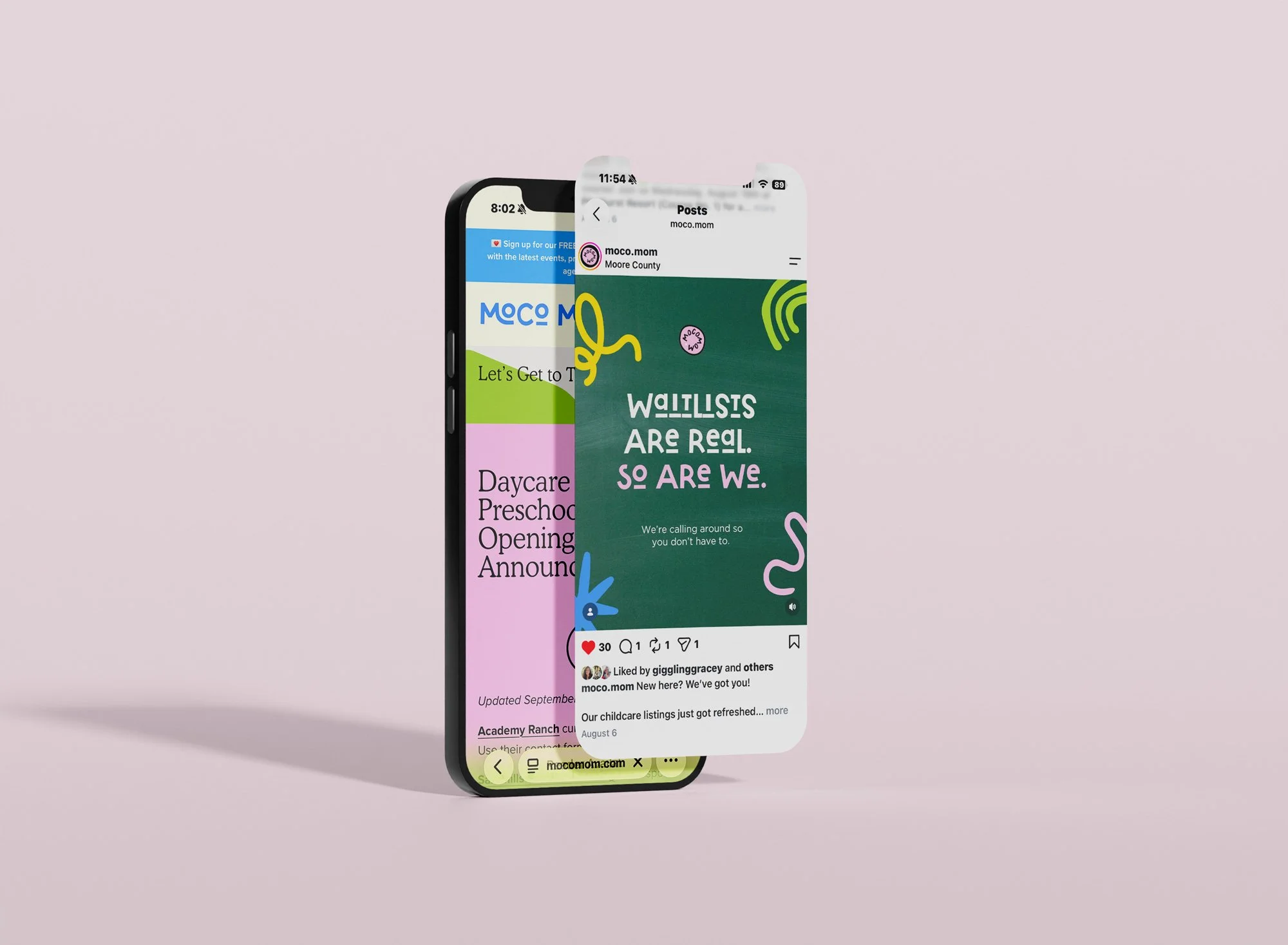
Because our local government finds resources like NCDHHS navigable, I knew families needed something more intuitive. I wanted to create a resource that made finding childcare and preschool options easier, while still thoughtfully vetting both licensed and unlicensed programs. The result was a dedicated Daycare Openings page and a library featuring more than 40 childcare and part-time preschool programs.
The same thinking shaped our Events Calendar, Summer Camp Schedule, Birthday Party Listings, Gyms with Childcare, and more—all designed to bring clear, concise, and organized information together in one place.
05. The Strategy: Give Mothers What They Need. Keep Them Coming Back for What They Want.
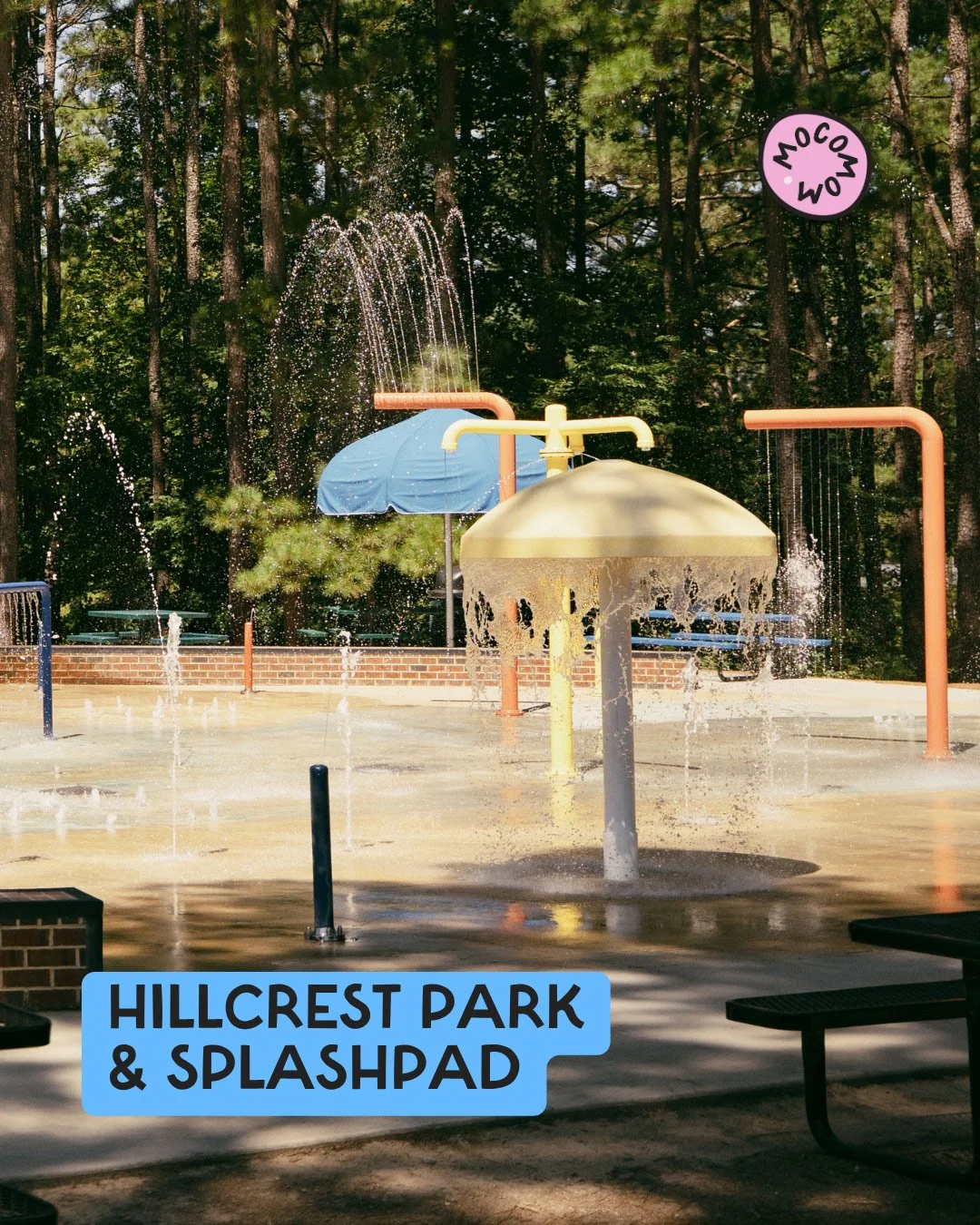
Every year, mothers find themselves searching for many of the same things. Summer camp registrations. Kindergarten enrollment. Strawberry picking. Splash pads. Pumpkin patches. Holiday lights. The locations change, but the needs are surprisingly predictable.
These recurring needs shaped our digital strategy across social media, newsletters, and community programming, while guiding our outreach and partnerships with local schools and organizations.
I structured MoCo Mom around a simple acquisition funnel: searchable directories attracted families with an immediate need; events and seasonal resources gave them reasons to return; our weekly newsletter inevitably maintained the relationship; and membership offered a way to access more value quickly as well as sustain the platform.
Social media introduced new audiences to the brand, but the event calendar, site and email list were designed to become more dependable points of hyperlocal connection.
And none of this required an expensive, custom-built platform. I connected accessible tools like Squarespace, Beehiiv, and Google Analytics to support discovery, content organization, email automation, and membership conversion.
I proved the experience could work without building custom software. I also learned exactly where custom software could make it better.



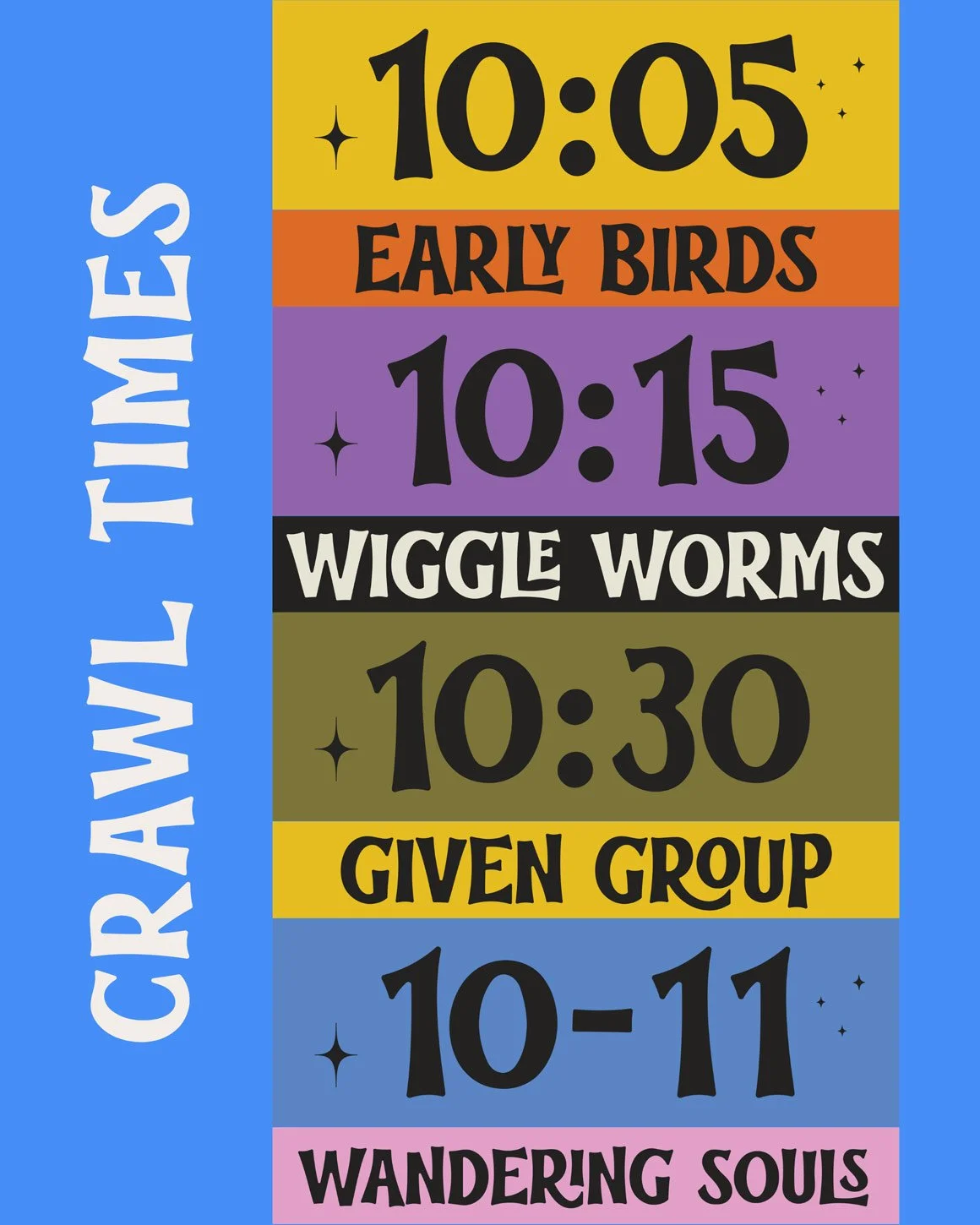
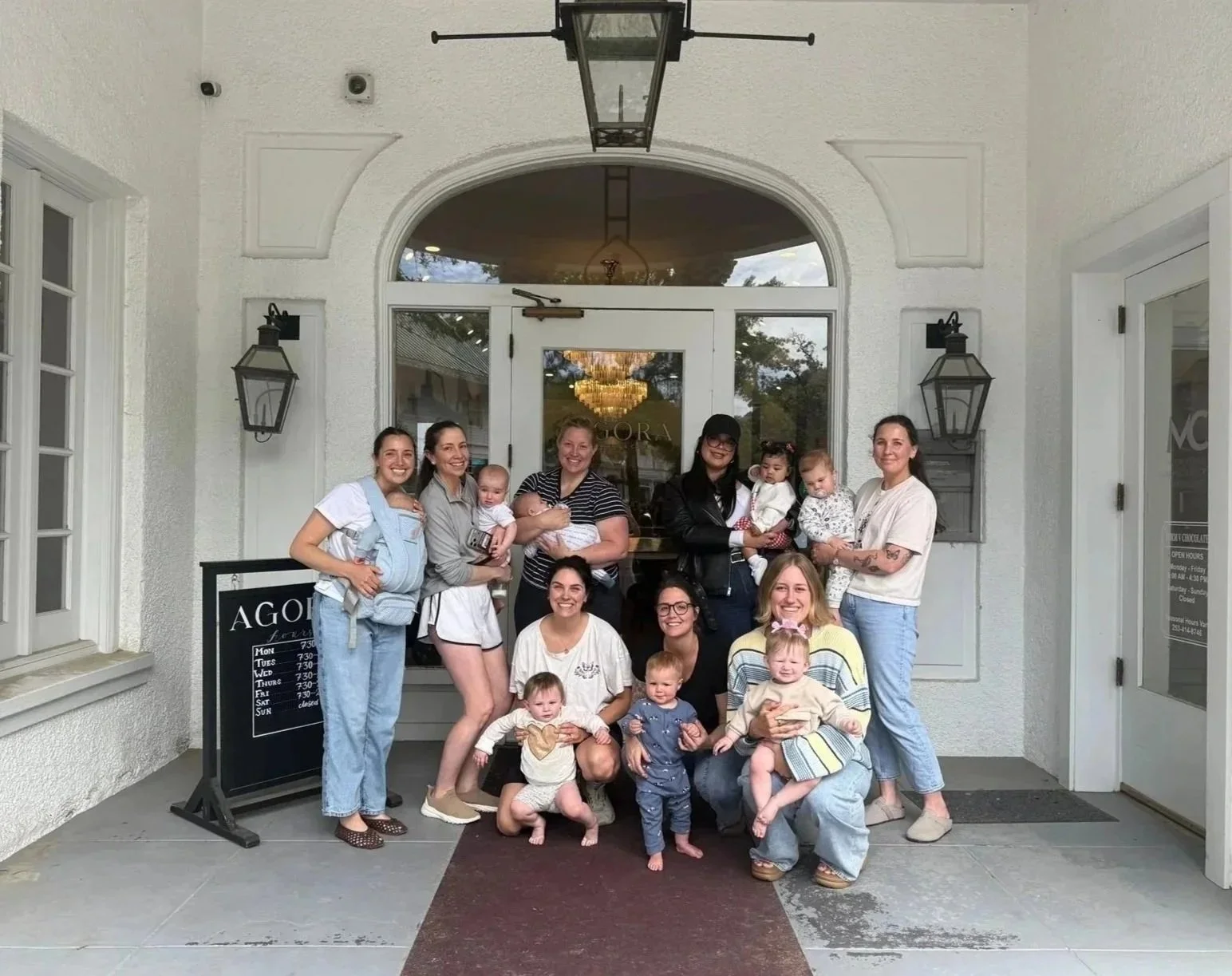
Photos are from our very first Tiny Tots Creepy Crawl in the Village of Pinehurst, created especially for our littlest trick-or-treaters who can’t always stay up late enough for Halloween night!
06. The Discovery: Mothers Weren't Just Looking for Resources. They Were Looking for Their Village.
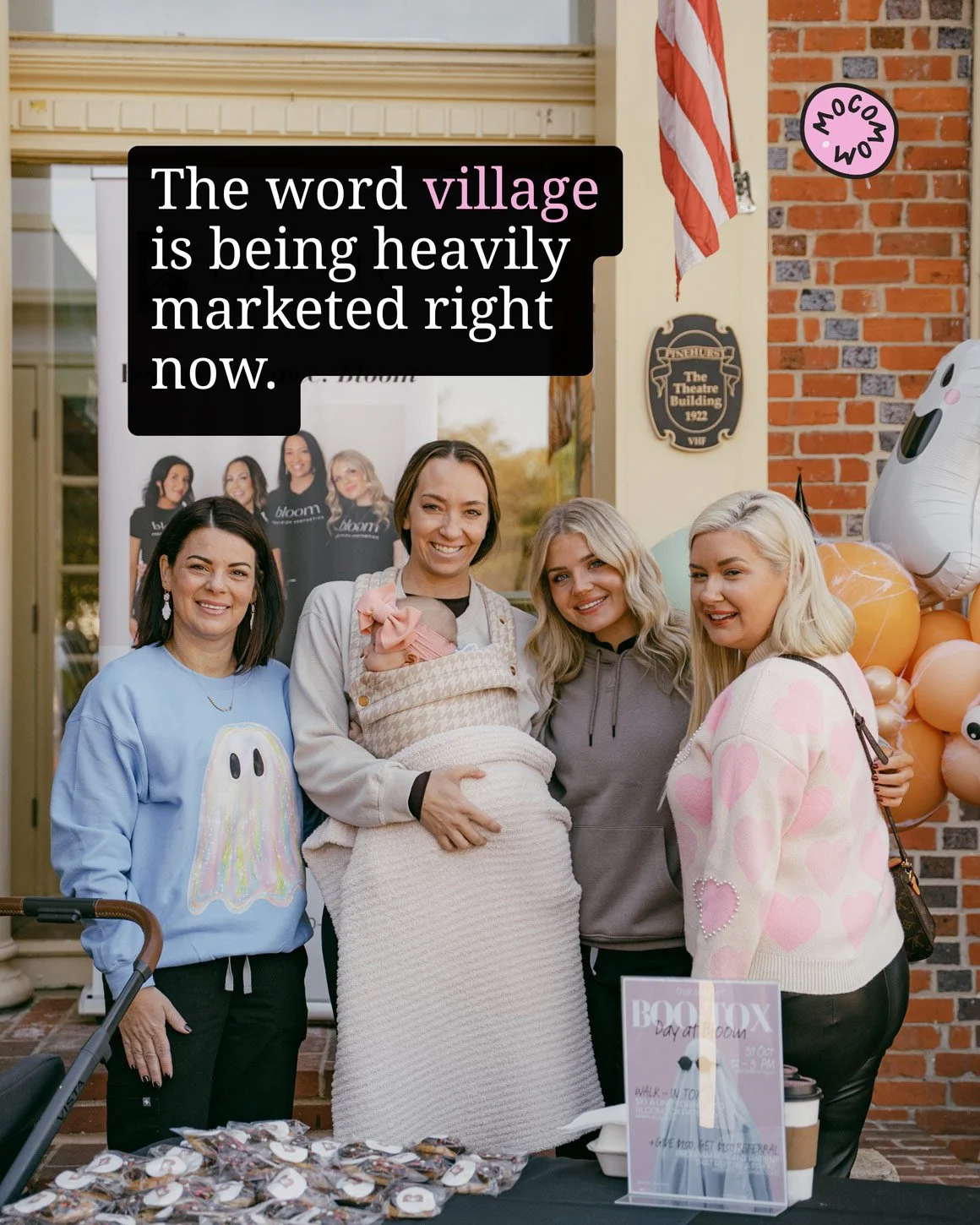
As MoCo Mom grew, our community surveys revealed something that a searchable directory alone couldn't solve. Mothers weren't just asking where to go or what to do. They wanted more opportunities to meet other mothers, build friendships, and feel connected to the community around them.
They were looking for their village.
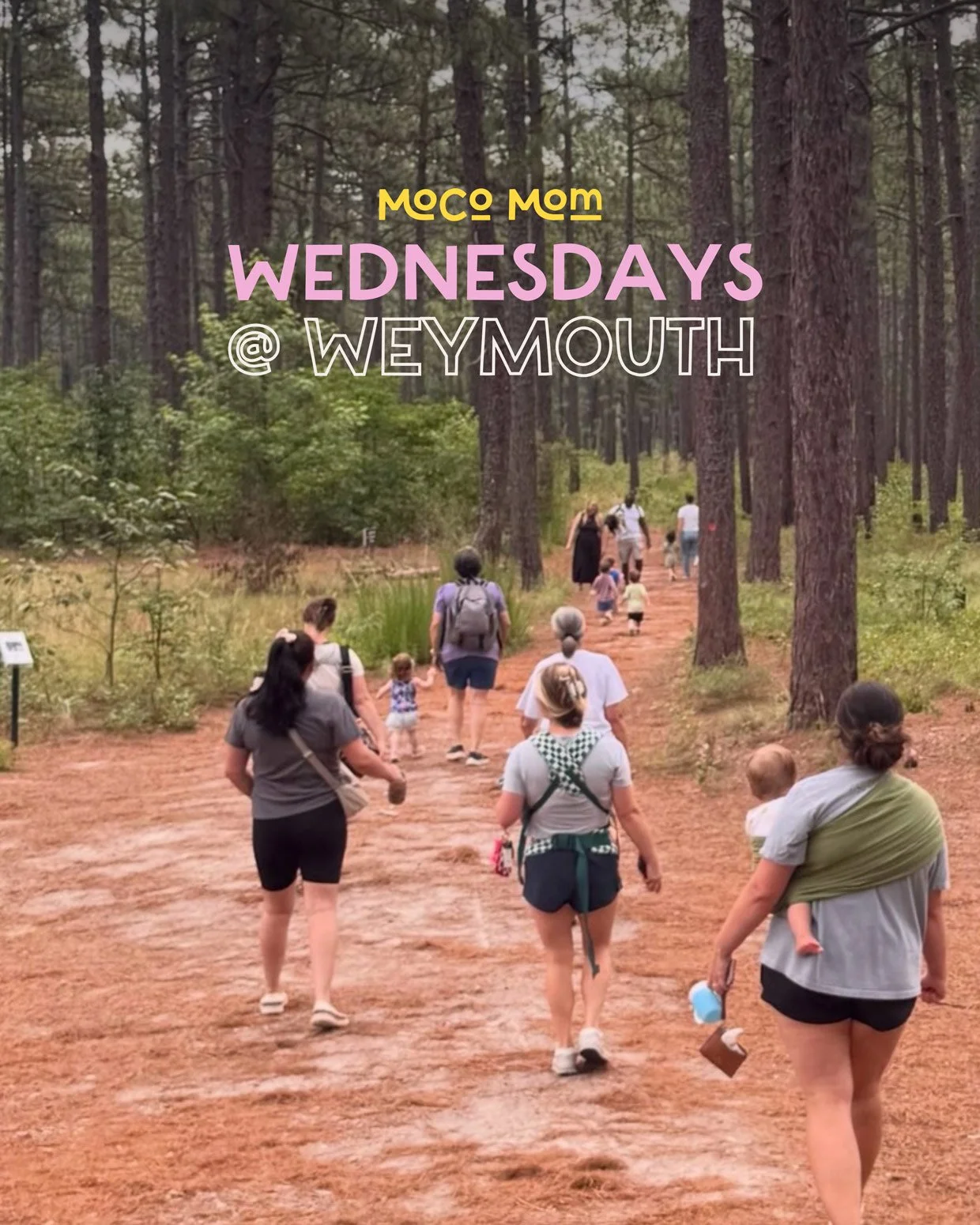
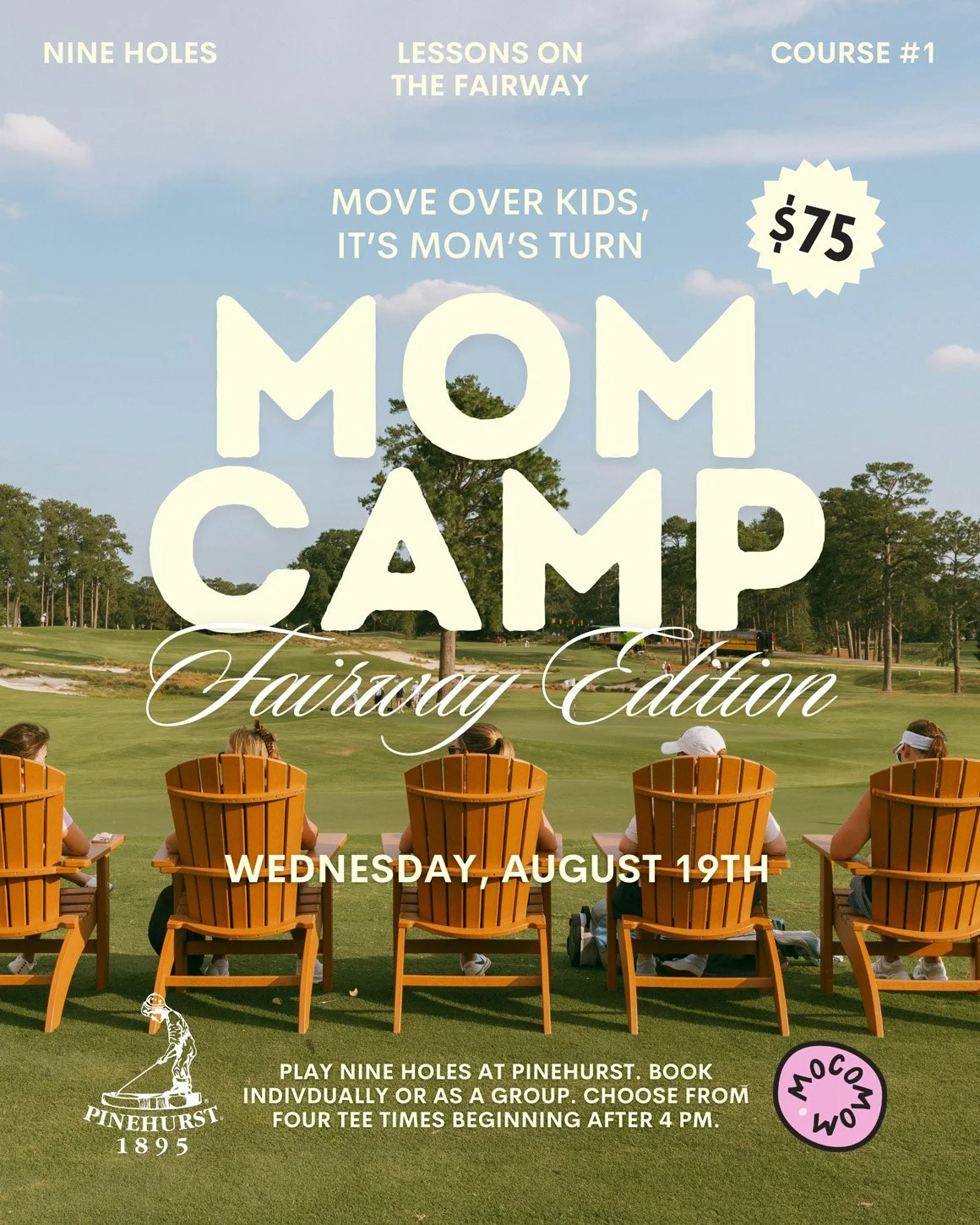
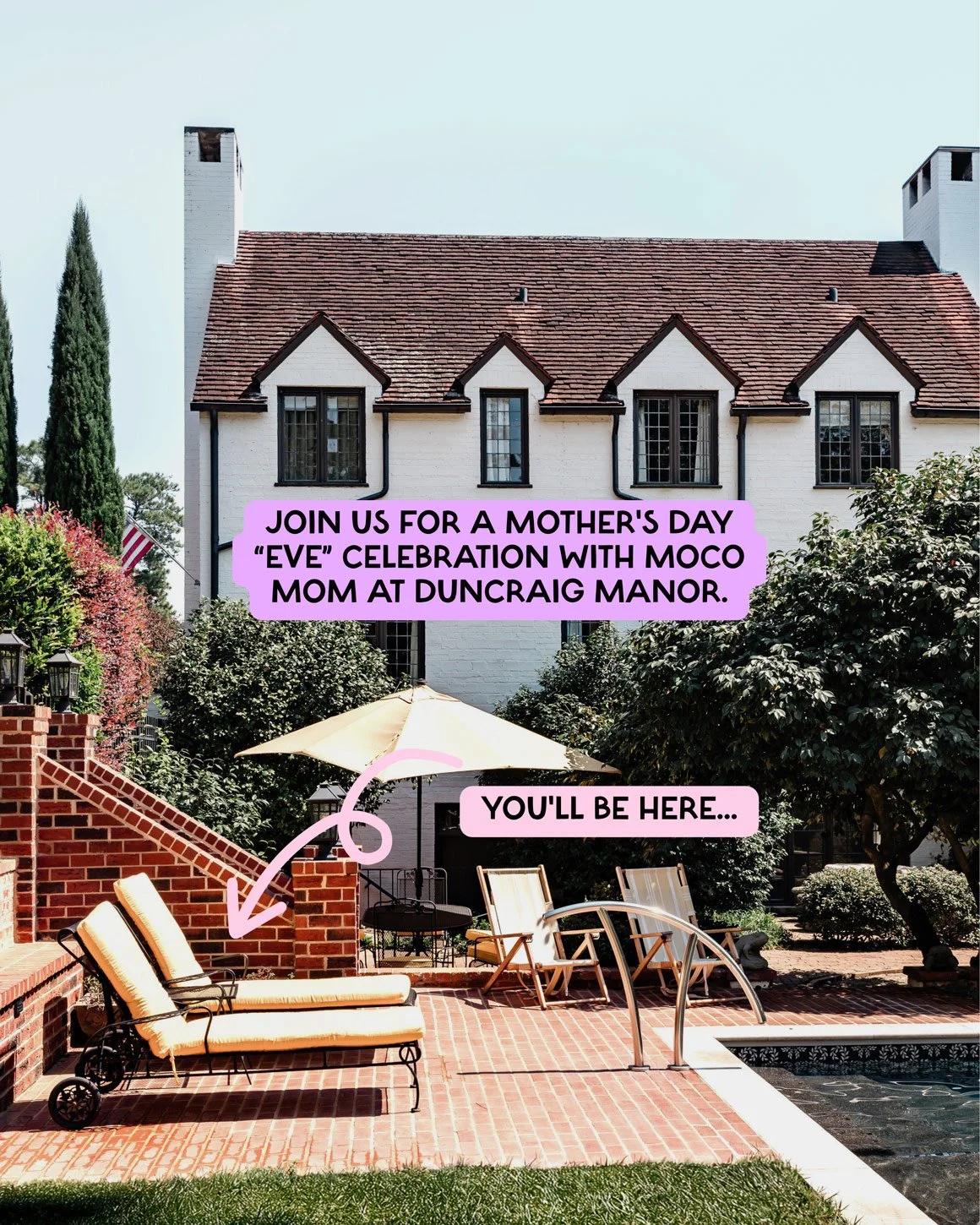
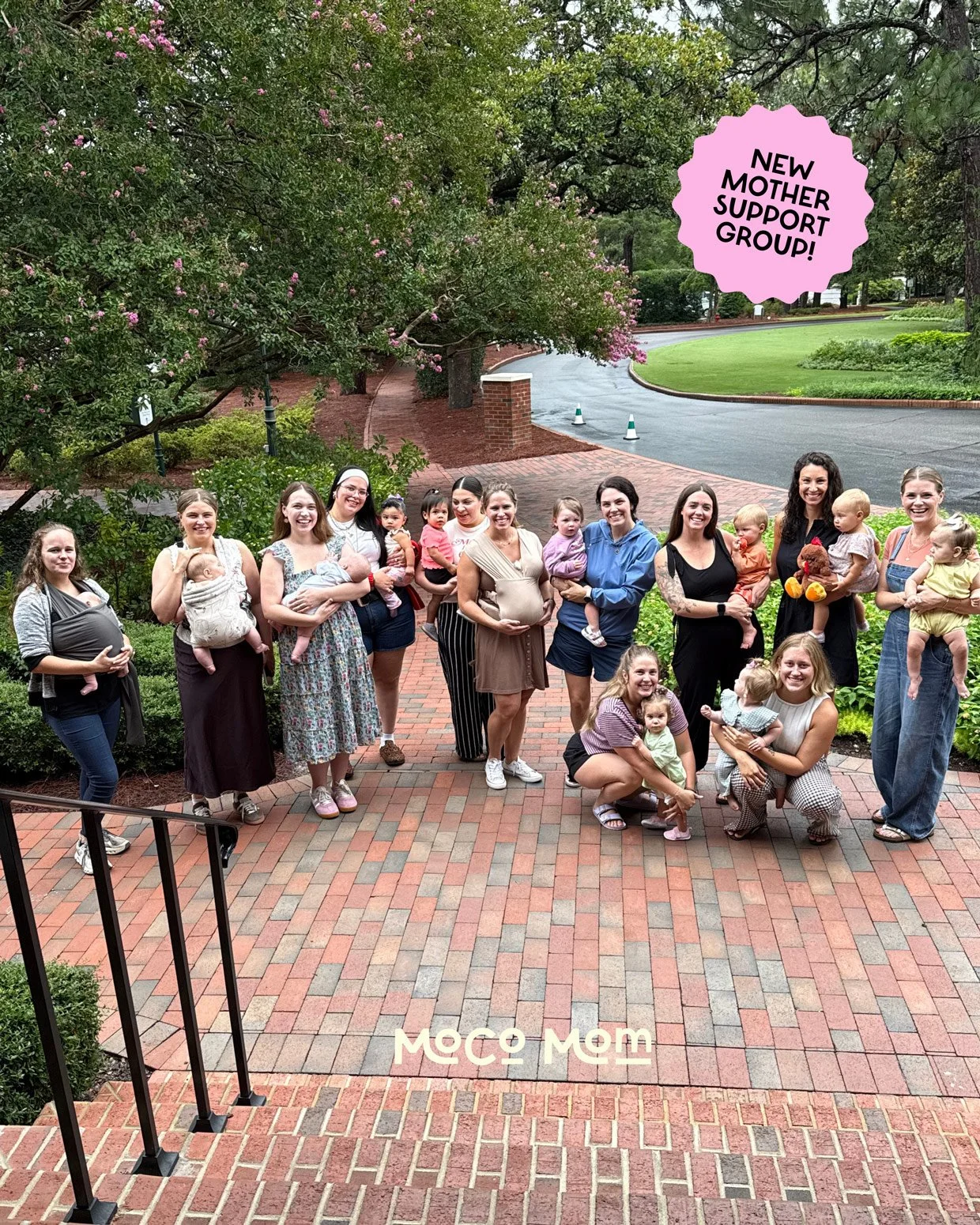
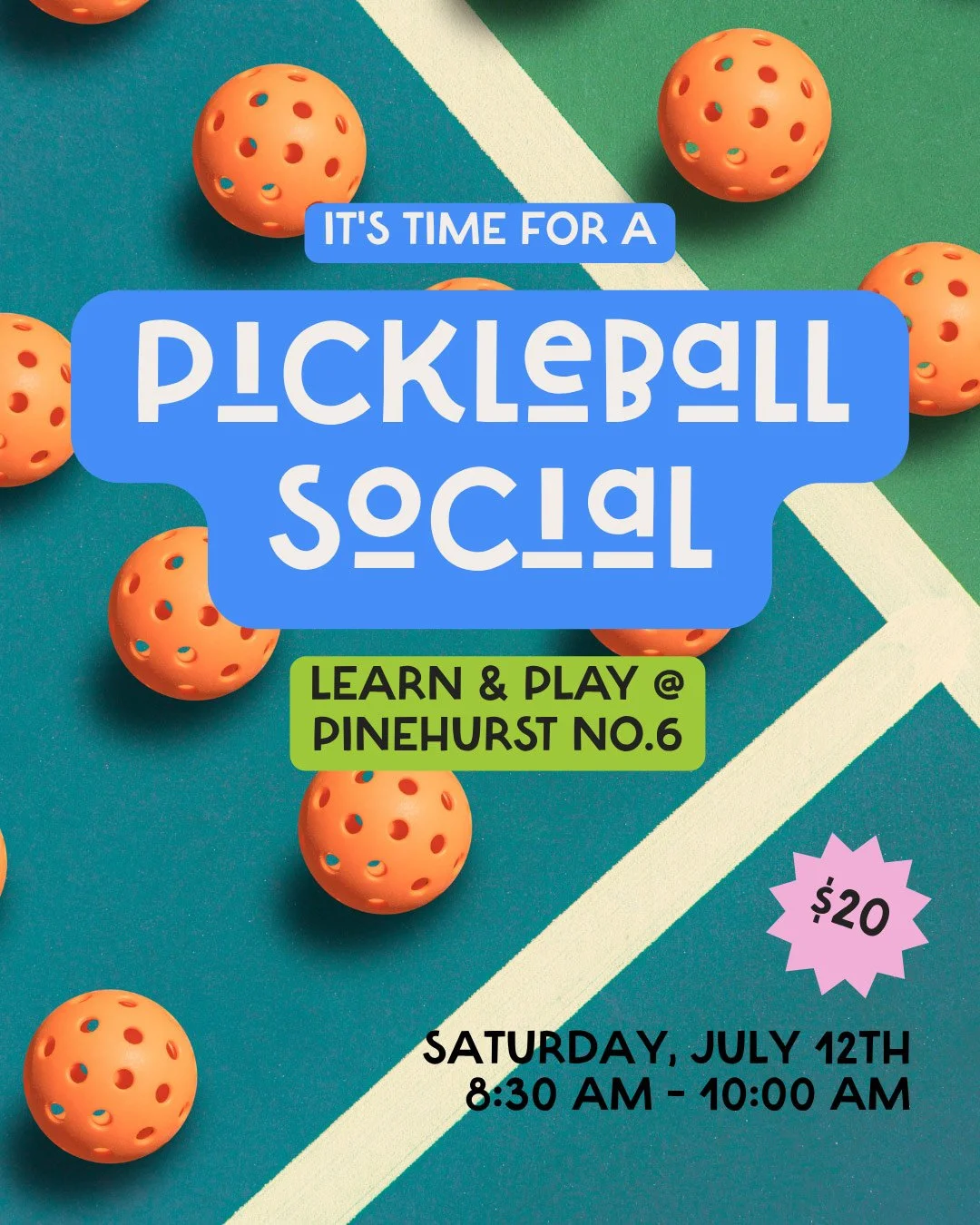
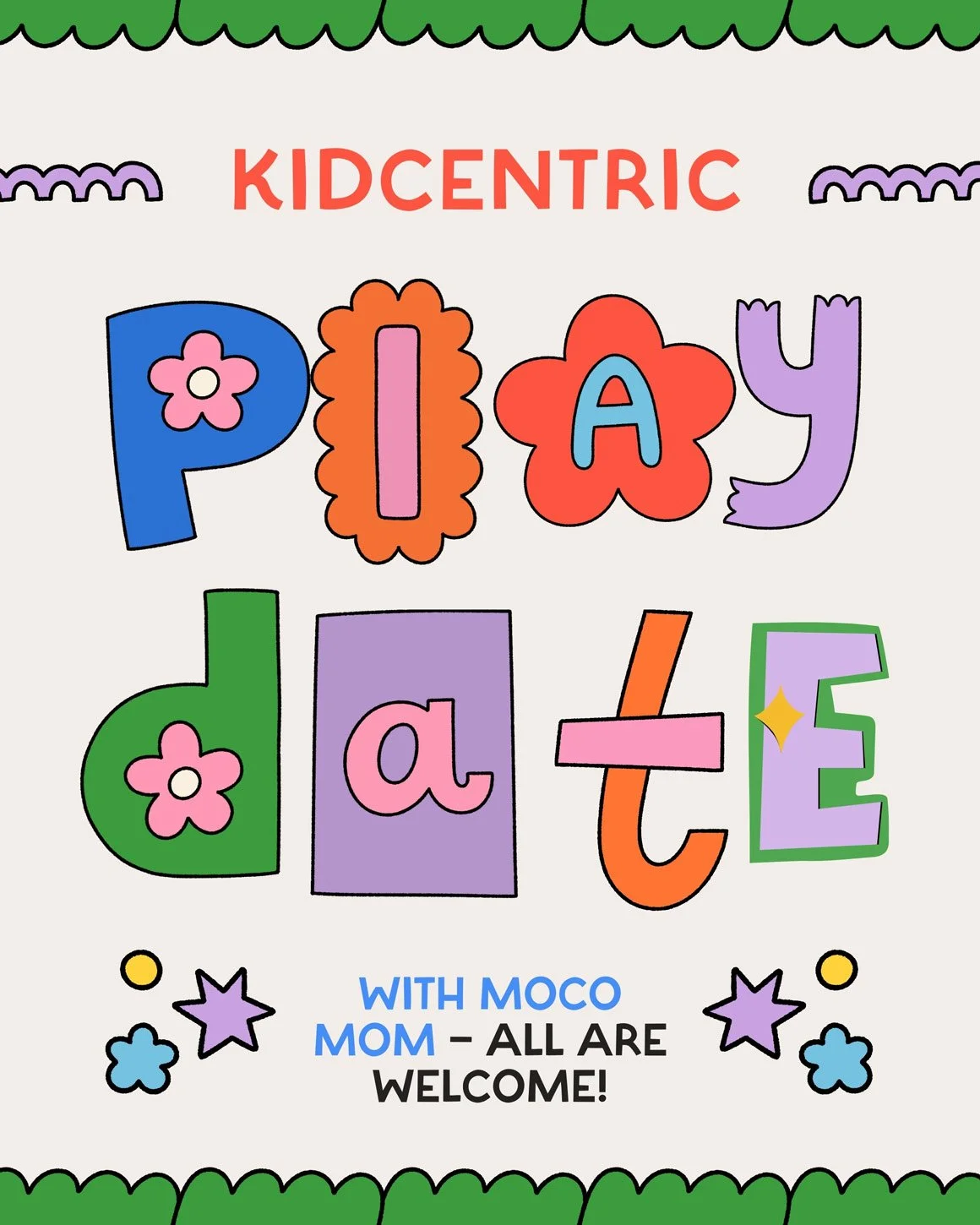
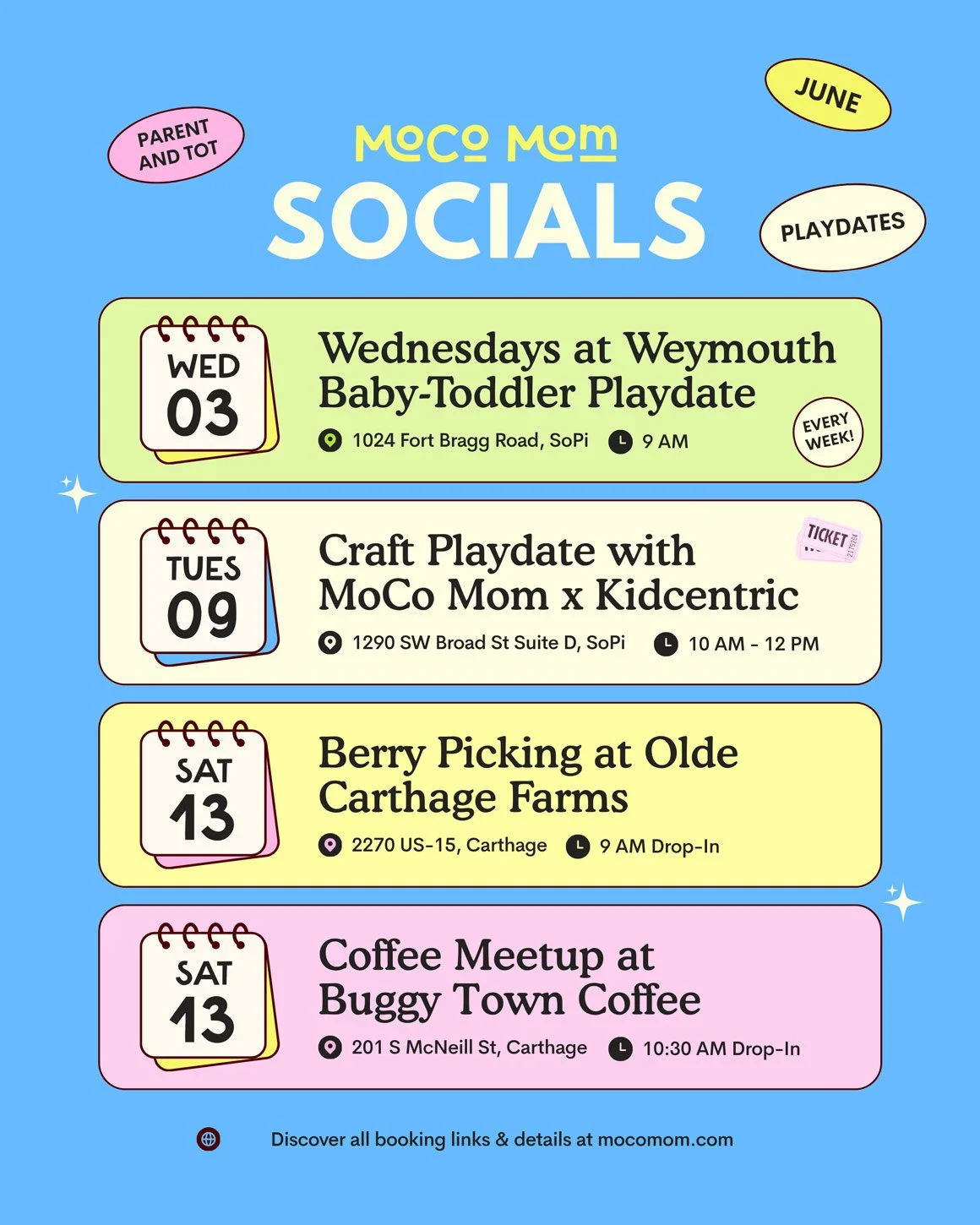
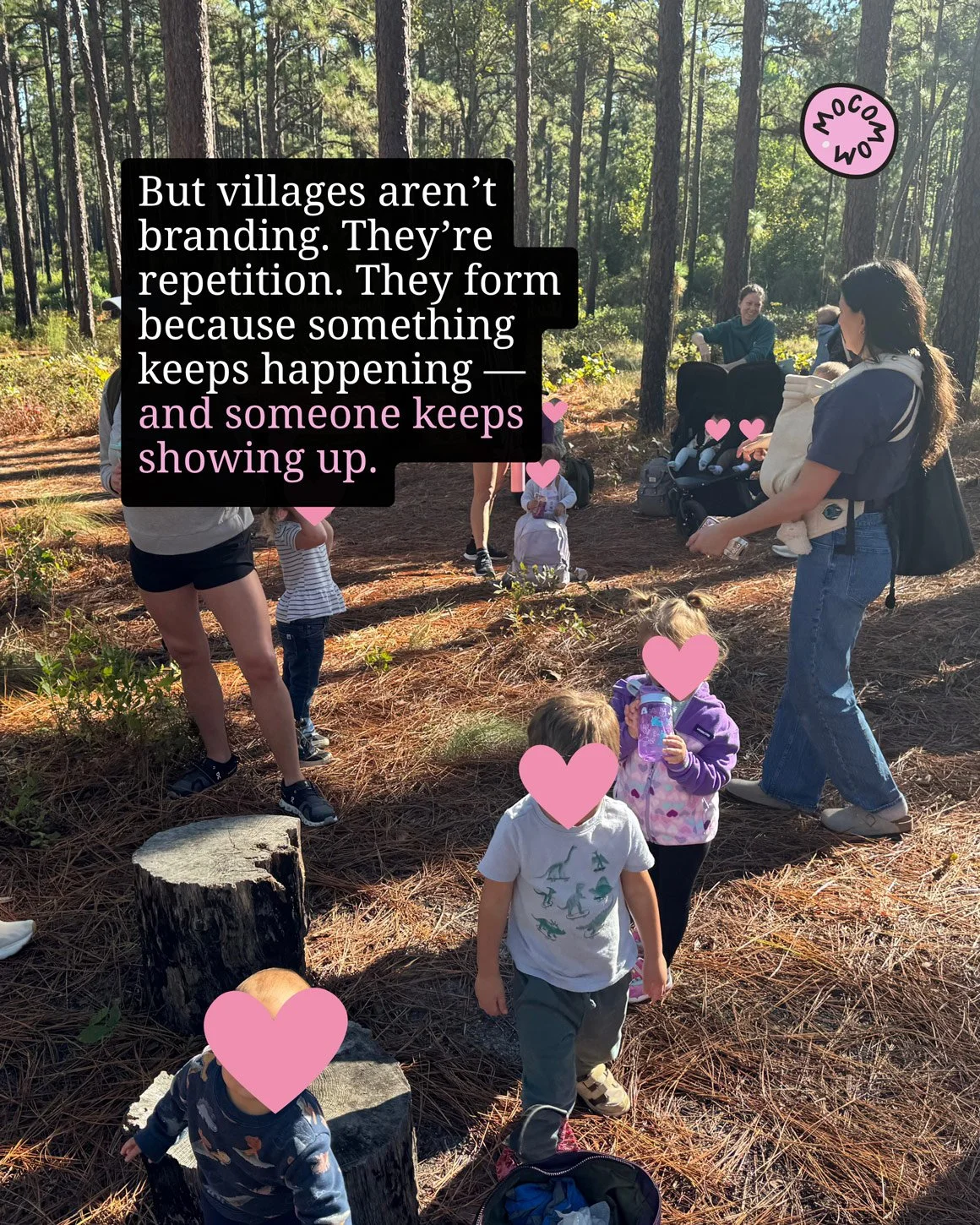
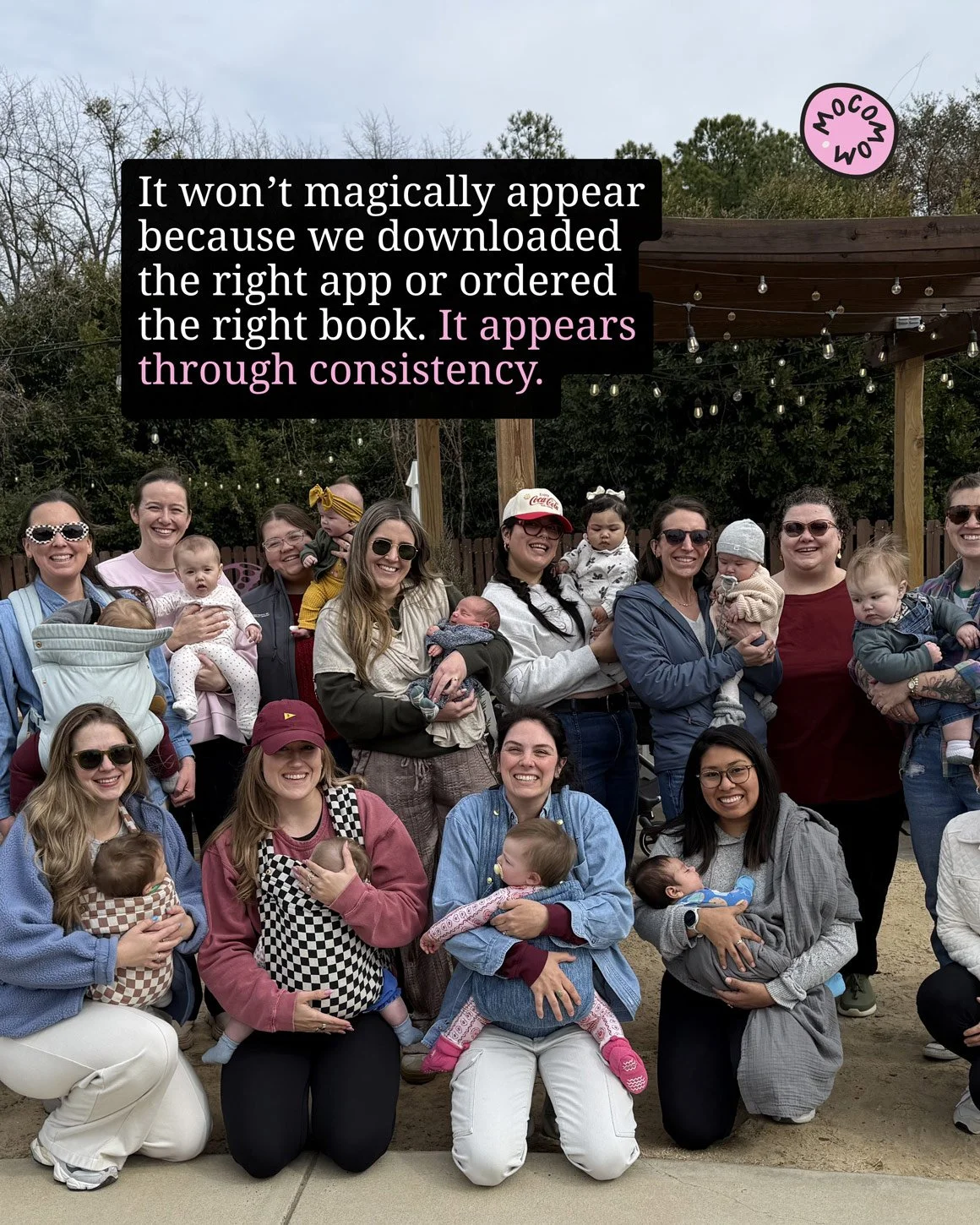
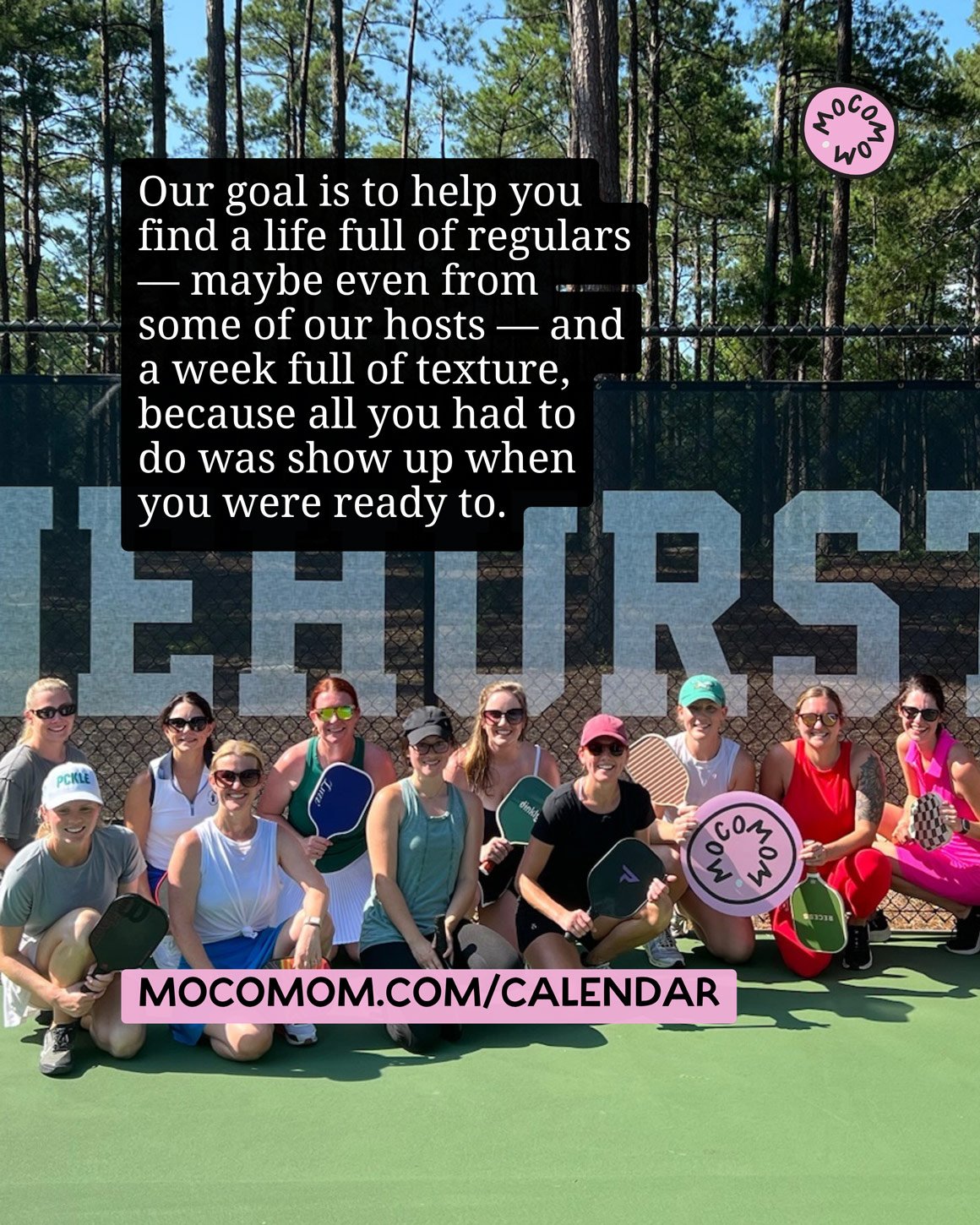
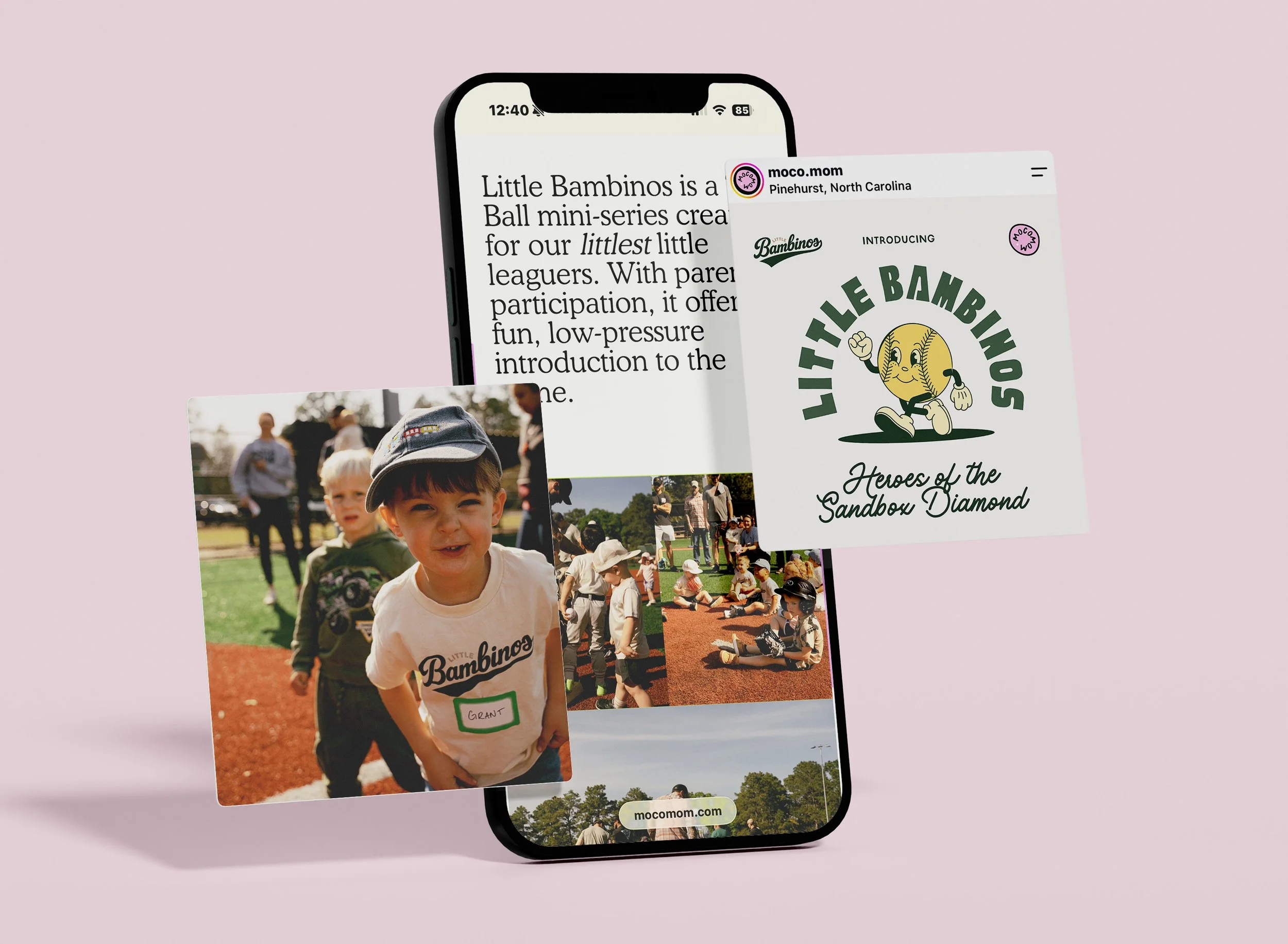
So we started creating opportunities to bring those connections to life. From weekly gatherings and New Mother Support Groups to Little Bambinos T-Ball, playdates, and seasonal celebrations, we developed programming that made it easier for families to show up, participate, and see familiar faces again.
One of our biggest experiments was Tiny Tots Creepy Crawl, a daytime Halloween experience designed specifically for children ages 0–6. By bringing together local businesses, community partners, and families throughout the Village of Pinehurst, we created something that was both a meaningful community experience and an opportunity to introduce new families to MoCo Mom.
It also became a creative answer to an early growth challenge: when established local channels weren't always willing or able to help promote us, we created experiences that families genuinely wanted to share.
The events strengthened the same ecosystem our digital platform was designed to support. Mothers discovered opportunities online, experienced them in person, and returned to find more.
The website helped mothers discover their community. The events helped them become part of it.


07. The Business Model: Mothers as Members, Not the Product
Here's the uncomfortable reality of building a “free” community resource: somebody has to pay for it whether through time or resources.
Maintaining directories, updating calendars, producing newsletters, coordinating programs, and staffing events takes hours of real work. Funds from advertising can help sustain platforms for mothers, but relying on it risks prioritizing the businesses trying to reach this audience over the mothers themselves.
I wanted to test a different approach and I couldn’t help but wonder: what if mothers themselves contributed a small amount to sustain the resource they were using?
At $12 per month, MoCo Mom grew to nearly 200 paying members within one year. Those contributions helped support a paid team, maintain the resources, and fund the ongoing work required to keep the platform useful.
Advertising and partnerships still had a place. But the goal was to build a business that didn't depend entirely on selling mothers and their information.
When mothers help fund the platform, mothers can remain the customer—not the product being sold.
08. The Results: Trust Before Numbers

Three years later, MoCo Mom had grown from a simple resource website into a trusted local brand, a recurring part of families' routines, and a business with paying customers.
The numbers were encouraging, but the behavior behind them mattered more. Mothers were returning to the website, opening newsletters, registering for events, building friendships, and paying for a resource that consolidated information they could technically find elsewhere for free.
And yes, AI is making it easier than ever to gather that information ourselves. But in my own experience, tools like ChatGPT and Claude still struggle to deliver something essential: a complete, trustworthy picture of what's available locally.
Complete and trustworthy are the important words here.
There's a difference between generating a list of childcare providers and knowing which ones are active, accepting families, or genuinely recommended by the mothers who use them. Personally, I'll take a $12, vetted recommendation from a local mother over an AI-generated list any day. And MoCo Mom proved that other mothers felt the same way. They weren't necessarily paying for exclusive information. They were paying for the convenience of having it thoughtfully curated, regularly maintained, and accessible in one place—with the added confidence that someone in their own community was behind it.
The shortcut was the product. Trust was what made it valuable.
MoCo Mom, By the Numbers
5,000+ monthly website visitors
1,500 newsletter subscribers
64% average newsletter open rate
3,250 Instagram followers
175 paying members
40+ childcare and preschool resources
*as of September 2026
09. The Bigger Picture: Designing Something Worth Sustaining
Each iteration was shaped by the community it served. And that's what made MoCo Mom different. It wasn't an influencer account built around my personality or an advertising platform built around access to an audience. It was a product built around a community's needs, with demonstrated value and recurring revenue.
In September 2026, I sold MoCo Mom to Annie, a longtime team member who had already helped bring much of its community programming to life.
For me, that was one of the most meaningful measures of success. The business had become valuable enough to sell, and the community had become established enough to continue without its founder.
MoCo Mom began with a problem worth solving. It became a business worth buying because we never stopped designing for the people it was meant to serve.
My master's in Visual Communications reinforced a philosophy that has guided my work ever since: when we identify a problem, design gives us a way to explore a solution.
But the first solution is rarely the final one.
Good design requires building alongside the people you're designing for—listening, testing, adjusting, and allowing the product to evolve as you better understand your audience needs. MoCo Mom was built that way.
What began as a simple resource website grew into a directory, events calendar, newsletter, membership platform, and eventually a community with its own programming and paid team.

10. What's Next: An Unfinished Idea
The funny thing about building a resource for military families is that eventually, the military moves you, too.
After our family relocated to Fort Leavenworth, I found myself right back where MoCo Mom began: searching for preschools, pediatricians, playgrounds, events, and all the little things that make a new place feel like home.
Only this time, I had three years of experience understanding the problem—and the work required to solve it.
MoCo Mom proved that a useful, community-centered platform could be built without expensive custom software. It also revealed the limitations of maintaining local information across disconnected systems and the challenges of making that work financially sustainable.
One thing I keep coming back to is how many sophisticated tools we've developed to manage a business. We have platforms for customer relationships, project management, scheduling, marketing, and operations. Yet there are remarkably few tools designed to help manage a household, let alone help a mother discover the resources she needs to care for herself and her family in the first place. Perhaps the problem was never that mothers didn't need these tools, but that no one saw enough financial opportunity in building them.
And because of that, my thinking has started to shift.
For years, we've built digital experiences around increasingly specific audiences and niches. But I suspect we're moving toward something even more personal: platforms built not just for people like me, but for me.
It's a somewhat frightening rabbit hole when you really think about it. Our algorithms already curate remarkably individualized feeds based on our interests and behaviors. It seems increasingly likely that with AI the websites, tools, and platforms we use will eventually become just as personal, adapting to our individual circumstances rather than asking us to navigate the same experience as everyone else.
I've started experimenting with a small app of my own through Lovable, organizing the places we might want to explore, events we might consider, and seasonal experiences I don't want my family to miss. Nothing particularly revolutionary. Just a useful little tool built around the life we're living right now, one with just us in mind.
And maybe that's what I find most exciting about where technology is headed. Not every digital product needs to become a business or scale to thousands of users to sustain it.
Instead, I find there's something rather wonderful about building a small, intentional piece of technology that makes our own corner of the world a little easier to navigate—even if all it does is lighten my mental load or remind us of a particular pumpkin patch we want to visit with the kids this weekend.
Maybe this kind of template is something more mothers could benefit from. But for now, there's something especially satisfying about designing for ourselves, without the pressure to monetize, market, or make it sustainable. Just building something useful because we can.
And that feels really, really good.
Every mother deserves a village.
Finding it shouldn't be another full-time job.
Have an idea for making communities more connected? Let's talk design and technology!